A flax egg white is a plant-based binding agent made by hydrating finely ground flaxseed meal in warm water. It relies on soluble mucilage fibers rather than animal proteins to hold ingredients together in vegan baking. One flax egg white replaces one chicken egg albumen in dense baked goods like muffins, pancakes, and cookies. It will not foam. Without denaturing proteins, flax gel cannot whip into meringue or trap air for soufflés.
Mucilage Chemistry: How Flax Mimics Egg Albumen
Real chicken egg white consists of water and about 10 percent globular proteins, mostly ovalbumin and ovotransferrin. A single large egg white weighing 33 g supplies 3.6 g of protein and 17 calories with zero dietary fiber. Above 62 °C, these proteins uncoil and cross-link into a rigid gel. This network sets cakes and holds soufflés upright.
Flaxseeds accomplish binding through a soluble fiber pathway. The outer seed coat contains mucilage, a complex polysaccharide. Ground seeds absorb warm water rapidly and swell into a slippery hydrogel. One tablespoon (7 g) of ground flaxseed provides 1.3 g of protein, 2 g of fiber, and 37 calories. The resulting gel provides wet adhesion and retains crumb moisture. It stays soft under heat because it lacks coagulating proteins.
Whole flax eggs frequently use dark brown flaxseed meal, leaving visible specks and an earthy flavor in light batters. Golden flaxseed meal produces a pale yellow gel for egg white recipes. It blends into light cakes without darkening the crumb.
Ratio and Prep Time for a Liquid Binding Gel
The ratio for one flax egg white is 1 tablespoon (7 g) of ground golden flaxseed meal mixed with 2.5 tablespoons (37 ml) of warm water. This yields 44 g of gel, matching the liquid volume of one large egg white.
- Grind the seeds finely. Whole flaxseeds pass through liquid without releasing their mucilage. Grind whole golden flaxseeds in a clean spice mill until they reach a fine flour consistency. Pre-ground flaxseed meal works if stored refrigerated away from light.
- Whisk with warm water. Measure 1 tablespoon of ground meal into a small bowl. Pour 2.5 tablespoons of warm water (around 40 °C) over the meal. Warm water dissolves the mucilage faster than cold tap water. Whisk with a fork for 30 seconds.
- Rest for 10 minutes. Leave the mixture undisturbed at room temperature for 5 to 10 minutes. As the soluble fiber hydrates, the slurry turns into a spoonable gel similar to raw albumen.
For three egg whites, combine 3 tablespoons of ground flaxseed with 7.5 tablespoons of warm water. When cooking real eggs in non-vegan household dishes, use the Egg Boil Timer">egg boiling timer for precise timings.

Flax Egg White vs Aquafaba and Whole Egg Albumen
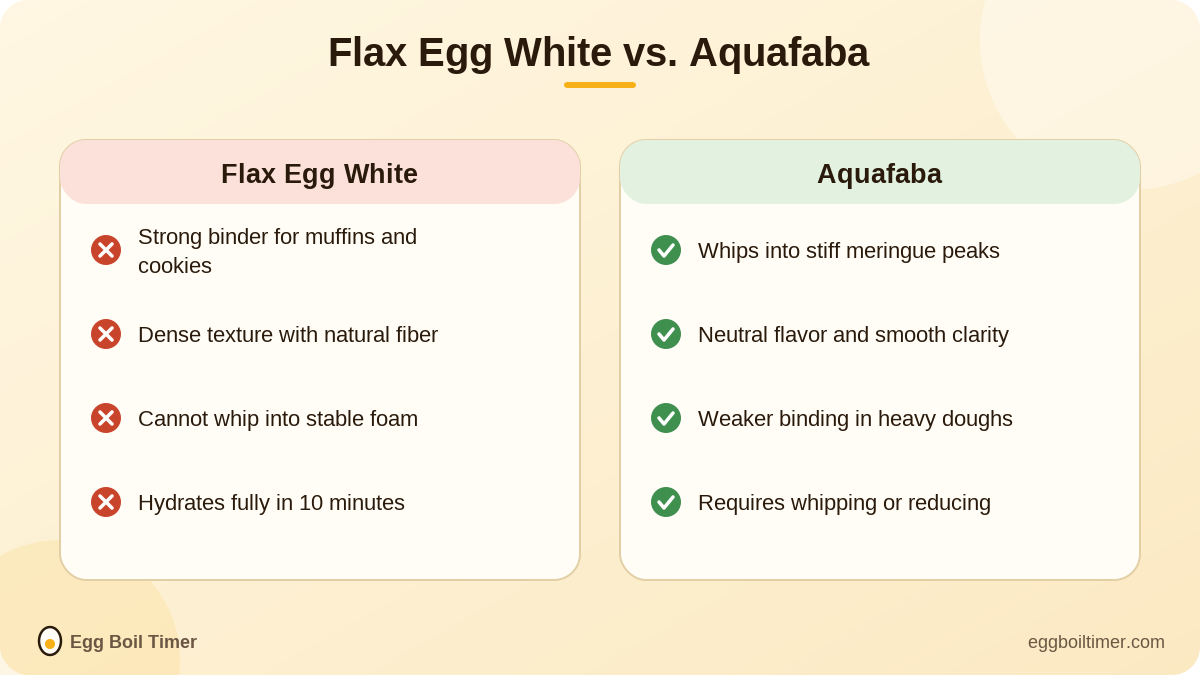
Choosing between egg albumen, flax gel, and aquafaba depends on your baking goal. Each option differs in aeration, moisture, and binding strength. The performance table below breaks down these three options across core baking functions.
| Baking Function. | Real Egg White (33 g). | Flax Egg White (1 tbsp seed + 2.5 tbsp water). | Aquafaba (3 tbsp liquid). |
|---|---|---|---|
| Primary mechanism. | Protein coagulation at 62–80 °C. | Soluble fiber hydrogel hydration. | Saponin and starch hydrocolloid foam. |
| Binding strength. | High strength. It sets firm under heat. | Moderate strength. It holds moist crumbs together. | Low to moderate strength. It acts as a light adhesive. |
| Whipping and foam. | Form stiff peaks in 4 to 6 minutes. | Zero whipping ability. It will not foam. | Form stiff peaks in 8 to 12 minutes. |
| Emulsification. | Moderate emulsifier from trace lecithin. | Low emulsification. It binds water, not oil. | Moderate emulsifier from proteins. |
| Flavor profile. | Neutral and savory albumen. | Mildly nutty from golden seeds. | Slightly starchy legume base. |
Flax gel handles simple wet binding well, but physical aeration is entirely beyond its capability. Aquafaba remains essential for meringues, macarons, and angel food cakes. Trapped air bubbles create structural lift in these recipes.

Matching Flax Egg Whites to Specific Recipe Textures
Flax egg whites perform best in baked items that rely on chemical leaveners like baking powder or baking soda for rise. Dense batters benefit from the added moisture and gentle binding without turning gummy.
- Quick breads and muffins: Flax gel holds banana bread, zucchini muffins, and cornmeal loaves together without crumbling during slicing.
- Chewy cookies: Oatmeal, chocolate chip, and peanut butter cookie doughs benefit from the water-retention capacity of flax mucilage, yielding a tender center.
- Pancakes and waffles: The gel binds flour, plant milk, and baking powder effectively while maintaining a tender griddle texture.
- Veggie patties and meatballs: Flax gel acts as a reliable binder for black bean burgers or lentil loaves, helping ingredients cling together in a hot skillet.
Avoid using flax egg whites in recipes where egg albumen supplies the main structure. Soufflés, chiffon cakes, and meringues collapse instantly with flax. It lacks proteins to trap expanding steam or air bubbles.
Fixing Slimy, Watery, or Gritty Flax Gels
Achieving correct viscosity requires accurate measuring and proper seed processing. Common texture problems usually stem from water temperature, resting time, or grind size.
- Mixture remains thin and watery: Coarse seed fragments cannot absorb water quickly. Regrind the seeds into a fine powder. If using pre-ground meal, extend resting time from 10 to 15 minutes.
- Mixture turns excessively thick or slimy: Too much flaxseed meal creates a gummy paste that makes batter heavy. Add 1 teaspoon of warm water at a time and whisk until the gel matches raw egg white viscosity.
- Gritty texture in finished baked goods: Coarse seed coats create a noticeable crunch. Use golden flaxseed meal and pass it through a fine sieve before whisking.
- Oil separation in heavy batters: Flax mucilage binds water, not fat. If batter separates, whisk the flax gel into liquid ingredients first. Then stream in plant oils or melted vegan butter.
When substituting flax in delicate white cakes, golden flax meal is essential. Brown flax meal imparts a noticeable tan hue and visible dark flecks throughout pale crumbs.
Chilling Limits and Cyanogenic Glycoside Safety
Prepared flax egg whites store safely in an airtight container inside the refrigerator for 5 to 7 days at 4 °C. Over time, the gel thickens further as hydration continues. Stir in half a teaspoon of cold water to restore its original pouring consistency before adding it to your batter.
For longer storage, freeze individual flax egg whites in silicone ice cube trays. Measure one egg white volume (44 g of gel) per compartment. Once frozen solid, transfer the gel cubes into a sealed freezer bag for up to 3 months. Thaw frozen cubes overnight in the refrigerator or let them sit on the counter for 20 minutes before baking.
Raw flaxseeds naturally contain trace cyanogenic glycosides. These plant compounds release small amounts of hydrogen cyanide when digested raw in large amounts. Oven temperatures above 150 °C during baking heat-deactivate these enzymes completely, making baked items safe. Avoid consuming large volumes of unheated raw flax slurry in uncooked frostings or raw doughs.


