If you plan to buy carton eggnog or make it from scratch, quality comes down to dairy fat, fresh spice, and egg yolk safety. Homemade eggnog uses whole milk, heavy cream, sugar, freshly grated nutmeg, and yolks gently heated to 71 °C (160 °F). Store cartons save time, but genuine eggnog requires at least 6 percent milkfat and 1 percent yolk solids.
Cooked Stovetop Eggnog: Milk Ratios and Safe Yolk Tempering
Raw eggs can harbor Salmonella bacteria. For safety, the USDA recommends cooking egg mixtures to 71 °C (160 °F) unless using pasteurized eggs. Cooking also activates yolk proteins to build body without setting into solid curds. This recipe yields six servings of 180 ml (6 oz) each.
- 6 large egg yolks (about 100 grams).
- 135 grams granulated sugar (2/3 cup).
- 475 ml whole milk (2 cups).
- 240 ml heavy whipping cream (1 cup).
- 1/2 teaspoon freshly grated whole nutmeg.
- 1/4 teaspoon ground cinnamon.
- 1 teaspoon pure vanilla extract (5 ml).
- 1/8 teaspoon fine sea salt.
- 120 to 180 ml bourbon, dark rum, or cognac (optional).
- Whisk the egg yolks, sugar, and salt in a heatproof bowl for 2 minutes until pale yellow and thick.
- Warm the milk, nutmeg, and cinnamon in a heavy saucepan over medium-low heat. Heat until steam rises at roughly 75 °C (167 °F), but do not let it boil.
- Ladle 120 ml (1/2 cup) of hot milk into the yolks while whisking steadily. Pour in a second ladle to warm the yolks without scrambling them.
- Pour the warmed mixture back into the saucepan with the remaining hot milk over low heat.
- Stir continuously with a silicone spatula, scraping the pot bottom and corners. Cook until the liquid thickens and reaches 71 °C (160 °F) on an instant-read thermometer. This step takes 6 to 8 minutes. Remove the pan from heat immediately.
- Strain the hot custard through a fine-mesh sieve into a clean pitcher to remove chalazae and stray curd particles.
- Stir in the heavy whipping cream, vanilla extract, and optional spirit. Cover tightly and chill in the refrigerator for at least 4 hours. Grate fresh nutmeg across each glass before serving.
Commercial Cartons: Decoding Minimum Milkfat and Yolk Regulations
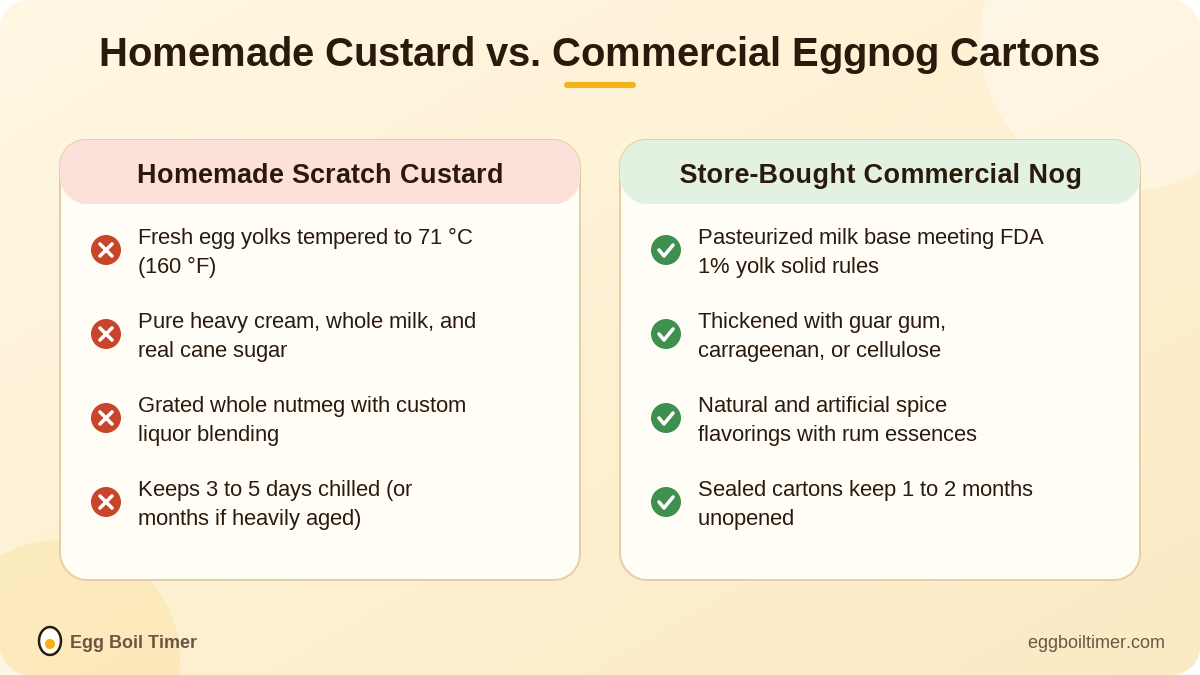
Shoppers looking to buy store eggnog will notice wide variations across dairy cases. Under 21 CFR 131.170, FDA regulations define real eggnog strictly. Commercial cartons must contain at least 6 percent milkfat and 1 percent egg yolk solids by weight. Cartons labeled holiday nog or holiday drink often skip real yolks entirely. These brands rely on water, skim milk powders, palm oil, and thickeners like carrageenan or gellan gum.
| Eggnog Type | Yolk & Dairy Base | Thickeners Used | Flavor Profile | Best Use Case |
|---|---|---|---|---|
| Homemade Cooked. | Fresh yolks, whole milk, cream. | Natural egg yolk emulsion. | Rich, clean cream and warm spice. | Holiday dinners and sipping neat. |
| Premium Creamery Carton. | Whole milk, cream, pasteurized yolks. | Minor carrageenan or guar gum. | Balanced dairy with vanilla notes. | Quick party punch or spiked drinks. |
| Budget Holiday Nog. | Skim milk, whey, palm oil, yolk powder. | Heavy cellulose, carrageenan, gums. | Very sweet, artificial rum notes. | Baking spice cakes and holiday cookies. |
| Plant-Based (Almond/Oat). | Oat milk, almond milk, or coconut cream. | Starches, pea protein, locust bean gum. | Nutty or toasted grain base, spiced. | Dairy-free and vegan gatherings. |
Before you buy carton eggnog, check that whole milk appears as the primary ingredient rather than corn syrup. Rich dairy custards demand the same precision as other egg-based classics. The milk-to-egg ratios that govern dessert sauces resemble other classic custards. Similar structures appear in baked dishes like Classic Quiche Recipe: Flaky Crust and Silky Egg Custard and soaked skillet breakfasts like French Toast: The Ratio, Bread Choice, and Pan Heat.

Spirit Pairings and Regional Variations: Rum, Coquito, and Advocaat
Eggnog balances dark spirits effectively. Milkfat coats the palate and reduces ethanol harshness while drawing out wood sugars from aged barrels. A standard batch targets 1 part alcohol to 4 or 5 parts dairy base, landing near 15 to 20 percent alcohol by volume.
Bourbon supplies caramel and oak tones that match brown sugar and vanilla. Dark Jamaican rum contributes molasses and spice. Cognac or brandy adds stone-fruit aromas that lighten the thick cream. A proven balance blends 90 ml (3 oz) of high-proof bourbon with 60 ml (2 oz) of dark rum.
Other cuisines developed their own yolk-thickened holiday drinks. Puerto Rican coquito combines condensed milk, evaporated milk, and coconut cream with white rum, using pasteurized yolks or skipping eggs altogether. Dutch advocaat forms a thick custard from beaten yolks, sugar, and brandy that requires a spoon to eat. In Mexico, rompope simmers whole eggs, milk, cinnamon, and ground almonds before finishing with cane liquor.

Grainy Custard, Runny Texture, and Curdling: Kitchen Fixes
Egg yolks coagulate between 65 °C and 70 °C (149 °F to 158 °F), while dairy sugars and fats raise that threshold slightly. When heat spikes past target limits, proteins clamp together and push water out.
| Symptom | Probable Root Cause | Immediate Kitchen Fix |
|---|---|---|
| Curdled or grainy texture. | Heat exceeded 75 °C (167 °F); yolks scrambled. | Pass immediately through a fine sieve; pulse in a blender for 20 seconds. |
| Runny, milk-like consistency. | Custard pulled off heat before reaching 71 °C (160 °F). | Return pan to low heat and stir until spoon coats, or fold in softly whipped cream. |
| Harsh sulfurous or "eggy" smell. | Stale eggs or scorched bottom proteins. | Add 1/4 teaspoon extra vanilla, a squeeze of fresh lemon peel, and fresh nutmeg. |
| Curdling after adding liquor. | High-proof alcohol poured directly into warm custard. | Cool base under 10 °C (50 °F) first, then whisk spirits in slowly. |
| Oily separation on top surface. | Overheated heavy cream broke fat emulsion. | Whisk in 30 ml (2 tbsp) cold whole milk vigorously until re-emulsified. |
Techniques that rescue scrambled custard apply to other delicate emulsions. Preventing yolk proteins from seizing against hot metal protects delicate emulsions. The same rule applies when whisking hollandaise for Classic Eggs Benedict Recipe: Poached Eggs and Silky Hollandaise or coating warm pasta in Authentic Carbonara: The Roman Egg Emulsion Recipe. Constant movement prevents heat spikes.
Cold Storage, Freezing Rules, and High-Proof Jar Aging
Cooked homemade eggnog belongs in sealed glass bottles on the primary refrigerator shelf between 1 °C and 4 °C (34 °F and 39 °F). Avoid storing eggnog inside the refrigerator door where frequent opening causes temperature swings. Alcohol-free batches stay fresh for 3 to 5 days.
Freezing works well for non-alcoholic batches. Pour the strained custard into freezer-grade containers, leaving 2.5 cm (1 inch) of headspace for liquid expansion. Freeze for up to 3 months. Defrost containers overnight in the refrigerator, then whisk vigorously for 30 seconds to recombine milk fats that split during freezing.
Aged eggnog follows a separate food preservation logic. Batches mixed with at least 15 to 20 percent alcohol by volume can rest in sanitized glass jars in the refrigerator for months. Alcohol inhibits bacterial growth while milk proteins slowly break down into smooth amino acids, rounding off sharp alcohol burn.
From British Medieval Posset to American Farmhouse Punch
Eggnog originated in medieval Britain as posset, a hot drink made by curdling heated milk with spiced ale or fortified wine. Wealthy households enriched the posset with figs, eggs, and imported spices such as nutmeg. Because spices carried steep import duties and fresh eggs were scarce during winter months, the drink signaled hospitality and social prestige.
The recipe adapted quickly in the eighteenth-century American colonies. Plentiful dairy cattle and chicken coops supplied constant milk and eggs, while cheap Caribbean rum replaced heavily taxed European spirits. George Washington recorded an exceptionally potent household recipe calling for rum, rye whiskey, Jamaica rum, and sherry blended into rich cream.
Mastering egg cookery begins with understanding how heat acts on egg proteins. Whether mixing holiday drinks or using the Egg Boil Timer, controlling temperature protects egg proteins from seizing.


