Eating eggs during pregnancy provides concentrated nutritional support, but raw or undercooked eggs carry a risk of Salmonella food poisoning. While the bacteria rarely infect the fetus directly, maternal dehydration, high fever, and vomiting can prompt uterine contractions or premature labor. Cooking eggs until both the yolk and albumen solidify eliminates this bacterial risk completely.
This is general information, not medical advice. Consult your obstetrician or midwife regarding individual dietary questions.
Runny Eggs and Regional Safety Standards
Whether you can safely eat a soft-boiled or runny fried egg depends on agricultural pasteurization laws and flock vaccination standards where you live. In the United Kingdom, eggs bearing the British Lion mark come from flocks vaccinated against Salmonella enteritidis under audited hygiene controls. The UK Food Standards Agency confirms that pregnant individuals can consume raw or runny British Lion eggs without added bacterial risk.
Outside the British Lion scheme, public health agencies such as the United States Food and Drug Administration (FDA) and Australian health departments advise pregnant women to avoid unpasteurized runny yolks. Standard shell eggs sold in North American supermarkets are washed and refrigerated, but laying hens are not universally vaccinated. If you live in the United States or Canada and crave runny yolks, buy cartons labeled pasteurized in the shell. These undergo a precise warm-water bath that destroys bacteria while leaving the yolk liquid.
| Region or Certification | Egg Classification | Permissible Doneness in Pregnancy | Safety Protocol |
|---|---|---|---|
| United Kingdom. | British Lion Mark. | Runny, soft, or firm. | Flock vaccination and audited hygiene. |
| United States / Canada. | Pasteurized shell eggs. | Runny, soft, or firm. | In-shell thermal pasteurization. |
| United States / Canada. | Standard unpasteurized carton. | Firm white and yolk only. | Cook to 71 °C (160 °F) core temperature. |
| European Union (general). | Standard supermarket eggs. | Firm white and yolk only. | Cook until solid throughout. |
| Any Region. | Farm-fresh or backyard eggs. | Firm white and yolk only. | Cook until solid to eliminate bacteria. |
Achieving Safe Egg Doneness Across Cooking Methods
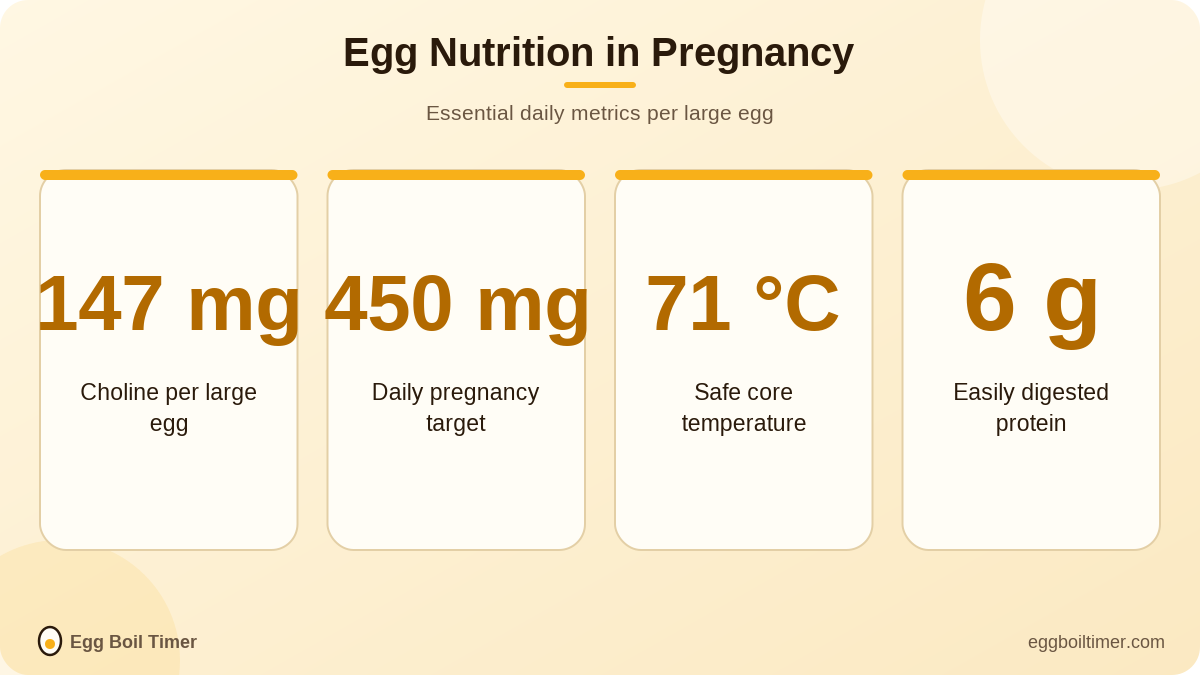
To eliminate foodborne pathogens without turning breakfast into dry rubber, target an internal temperature of 71 °C (160 °F). Visual assessment provides an accurate gauge in daily kitchen cooking. Both the clear albumen and the liquid yolk must change from translucent fluids into opaque solids.
Boiling offers the most foolproof preparation. Place large eggs straight from the refrigerator into boiling water and simmer steadily for 10 minutes. Alternatively, follow the presets on our Egg Boil Timer page to produce fully set yolks without a dry green ring. A safe hard-cooked yolk looks pale yellow and crumbles cleanly when sliced.
Scrambled eggs need moderate heat and patience. Whisk the eggs in a bowl, pour them into a buttered skillet, and stir continuously until no liquid pools at the bottom. The curds should look glossy and moist without any runny, loose albumen remaining.
Fried eggs require flipping if the eggs are unpasteurized. Sunny-side up eggs leave the upper yolk uncooked, making them unsuitable outside certified British Lion or pasteurized cartons. Fry eggs over-medium or over-hard by turning them in the pan until the yolk cushion firms completely. When poaching, keep the water at a gentle simmer for at least 5 minutes until the yolk sphere resists a spoon press.

Fetal Brain Development and Maternal Choline Demands
Eggs are one of the richest dietary sources of choline, an essential nutrient that collaborates with folate to build neural structures and prevent neural tube defects. Maternal liver synthesis cannot meet gestational demand, especially through the second and third trimesters as the fetal brain expands rapidly.
One large egg supplies roughly 147 mg of choline, almost entirely housed within the yolk. The established target for pregnancy is 450 mg each day. Eating two eggs covers almost two-thirds of that daily need. Many standard prenatal multivitamins omit choline or supply less than 50 mg because the molecule is bulky, making whole foods essential.
Whole eggs also provide 6 grams of complete protein per egg, supporting blood volume growth and placenta development. Yolks contribute bioavailable lutein, zeaxanthin, vitamin B12, and iodine, which supports maternal thyroid balance and fetal metabolic development.

Weekly Consumption Limits and Gestational Lipid Health
Expectant parents often ask whether an egg or two every day drives blood cholesterol too high. Dietary cholesterol does not automatically raise blood cholesterol levels for most people. For an explanation of how the body regulates dietary lipids, see our guide on Eggs and Cholesterol: What Current Science Recommends.
Major cardiovascular and public health groups, including the Australian Heart Foundation, conclude that eating up to seven eggs a week fits well within a healthy pregnancy diet. If your doctor has noted pre-existing hyperlipidemia, familial cholesterol disorders, or gestational diabetes, check with them to set personal limits. For uncomplicated pregnancies, the concentrated micronutrient content of whole eggs outweighs cholesterol concerns.
Managing Morning Sickness and Egg Texture Aversions
First-trimester hormonal changes can heighten smell sensitivity, turning warm eggs into an immediate nausea trigger. Trying to force down a hot fried egg when feeling sick usually worsens the aversion. Several simple kitchen adjustments help preserve the nutrient benefits without triggering nausea:
- Chill hard-boiled eggs in the refrigerator for two hours before eating. Cold eggs release fewer sulfur aromas and feel less oily on the tongue.
- Bake eggs into frittatas, vegetable casseroles, or muffin-tin egg bites, where herbs, vegetables, and potatoes soften the egg taste.
- Prepare French toast on whole-grain bread. The toasted starch and light cinnamon flavor make the cooked egg batter much easier to tolerate.
- If eggs remain unpalatable, rely on alternative choline sources such as cooked chicken, roasted edamame, steamed broccoli, kidney beans, and quinoa until your appetite resets.
Spotting Hidden Raw Eggs in Commercial and Restaurant Foods
Staying safe also means noticing sauces and desserts where raw eggs hide behind innocent names. Commercial, shelf-stable items on regular grocery aisles rely on pasteurized liquid eggs, meaning store-bought jars of mayonnaise and bottled dressings pose no hazard. Scratch-made restaurant preparations, however, warrant attention:
- Artisanal condiments like house-made aioli, Béarnaise, fresh mayonnaise, and hollandaise sauce use warm emulsified yolks that rarely reach safe pasteurizing temperatures. Confirm with the kitchen whether pasteurized eggs were used.
- Classic restaurant desserts, including authentic tiramisu, chocolate mousse, and raw-set cheesecakes, often incorporate uncooked whipped egg whites or raw yolks.
- Traditional Caesar salad dressings made to order incorporate raw egg yolks with oil and anchovies.
- Cocktails and mocktails garnished with shaken egg white foam introduce raw albumen. Request drinks without foam.
- Raw dough or cake batter contains uncooked eggs and raw untreated flour, both of which carry bacterial risks.
Kitchen habits matter as much as heat. Keep carton eggs on a main refrigerator shelf at 4 °C (40 °F) rather than in the door, where warm air hits every time it opens. Wash hands after handling whole shells, and keep raw eggs away from surfaces holding ready-to-eat produce. When preparing meals for family members as your child grows, consult our advice on Runny Eggs for Toddlers: Why the Answer Depends on Where You Live and recognizing an early Egg Allergy Symptoms, Causes, Diagnosis, and Management.


