You bought the freshest eggs you could find, boiled them carefully and then lost half the white to the shell. It feels unfair, and it is: the fresher the egg, the harder it is to peel.
What happens inside a fresh egg
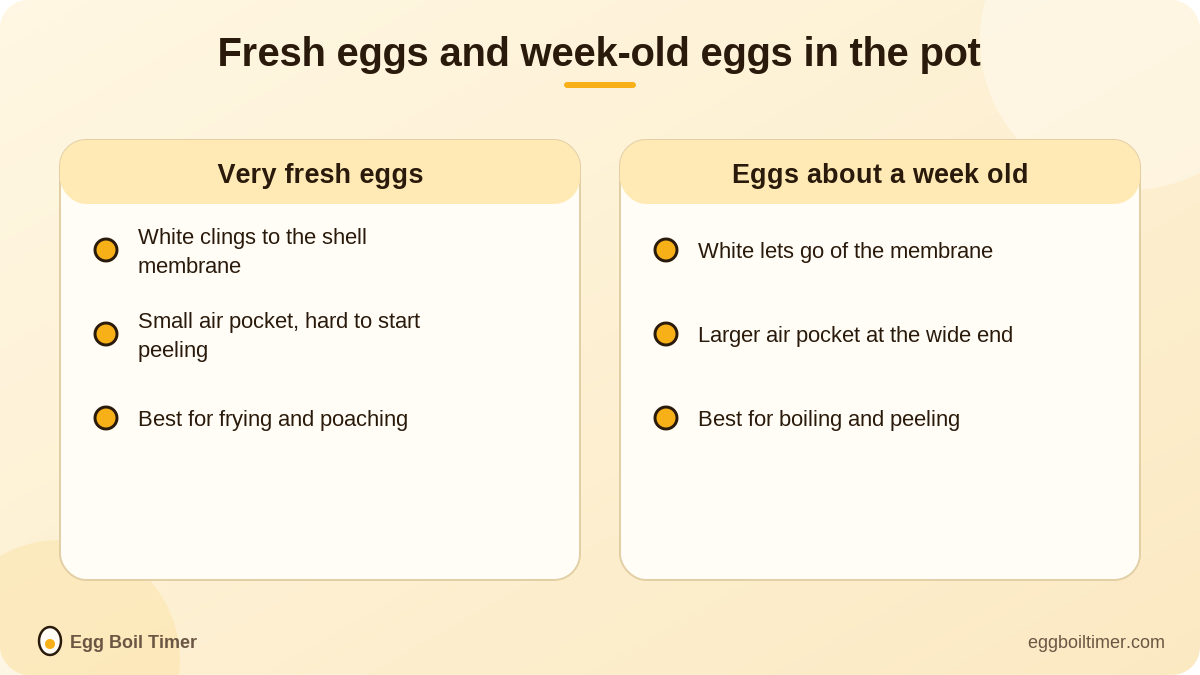
In a newly laid egg the white is slightly acidic and clings tightly to the thin membrane under the shell. Over the following days the egg slowly loses carbon dioxide through its shell, the white becomes more alkaline and its grip on the membrane loosens. The small air pocket at the wide end also grows, which gives you a place to start peeling.
That is why eggs that have been in the fridge for a week or so usually slip out of their shells, while eggs from the same hens on day one do not.
If fresh eggs are all you have
- Lower them into water that is already boiling. Starting hot helps the white pull away from the membrane.
- Move them into ice-cold water the moment the time is up and leave them for 5 minutes.
- Crack the shell all over, then peel from the wide end, under water. The water gets between the white and the membrane.

Plan one carton ahead
If you boil eggs every week, buy the next carton before the current one is finished and boil the older eggs first. Save the freshest ones for frying and poaching, where freshness really shows.
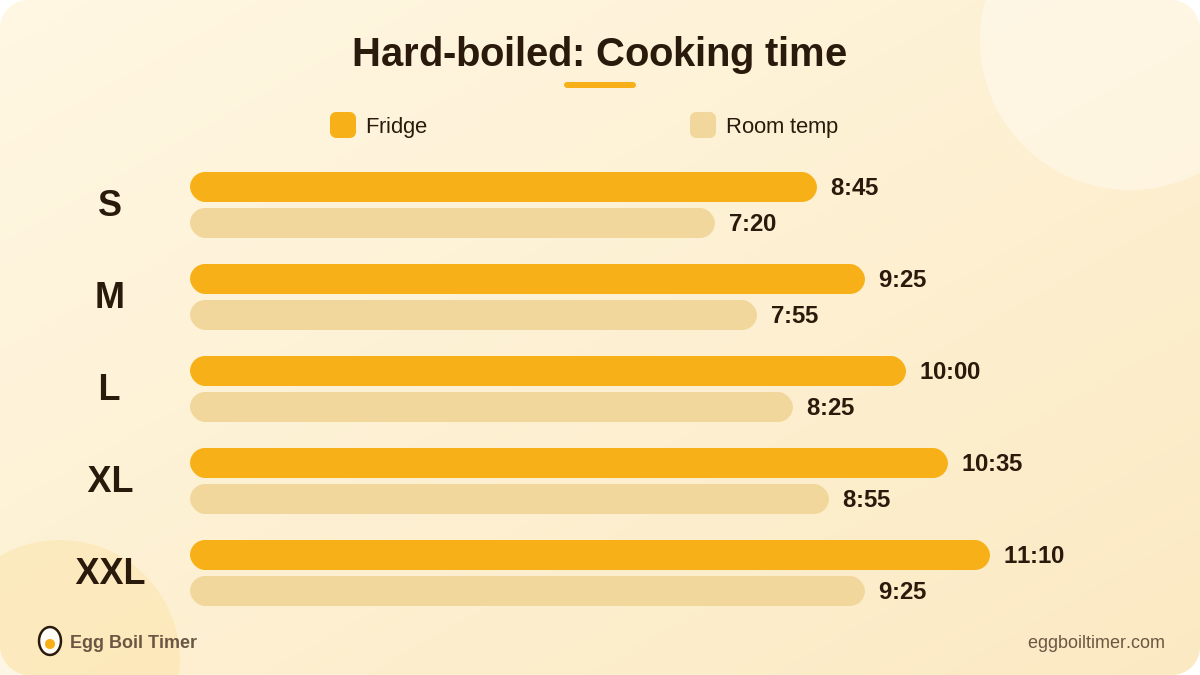
Peeling is only half of a good boiled egg. For the other half, set the Egg Boil Timer to your egg size and the yolk you like, or go straight to the Hard Boiled Egg Timer if they are for a salad.