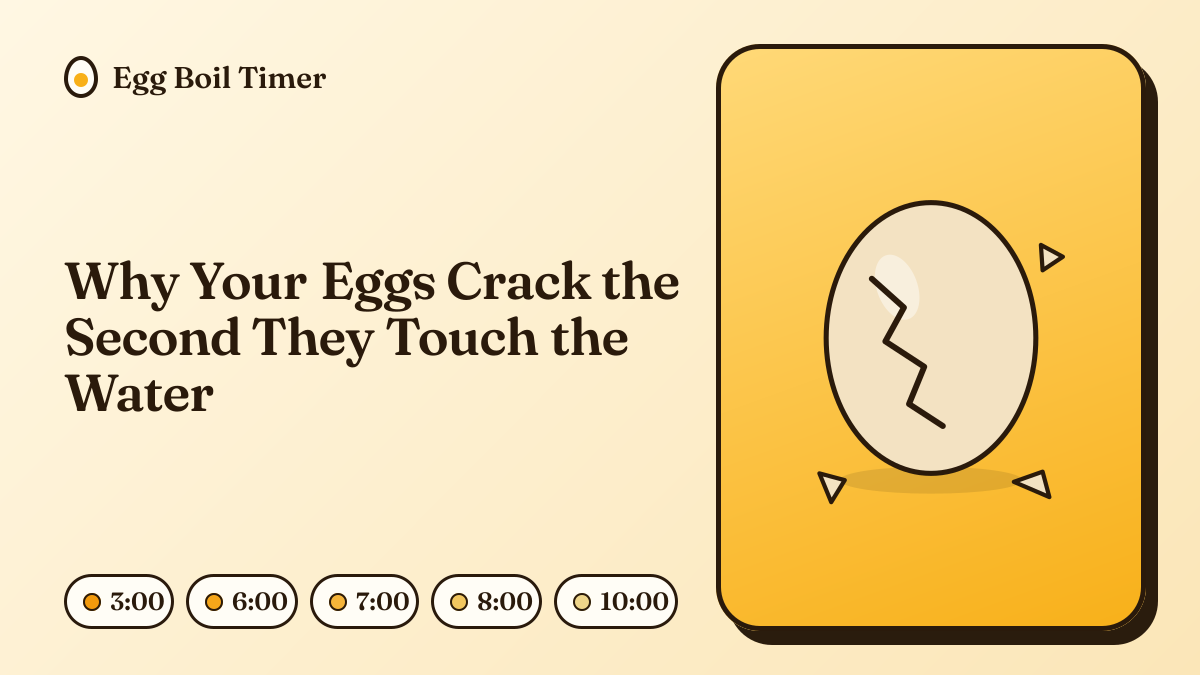
You lower an egg into the pot, hear a small tick, and a white ribbon starts to drift through the water. The egg is still edible, but it will come out lopsided and waterlogged. It happens often enough that many people think it is just luck. It is not.
What actually breaks the shell
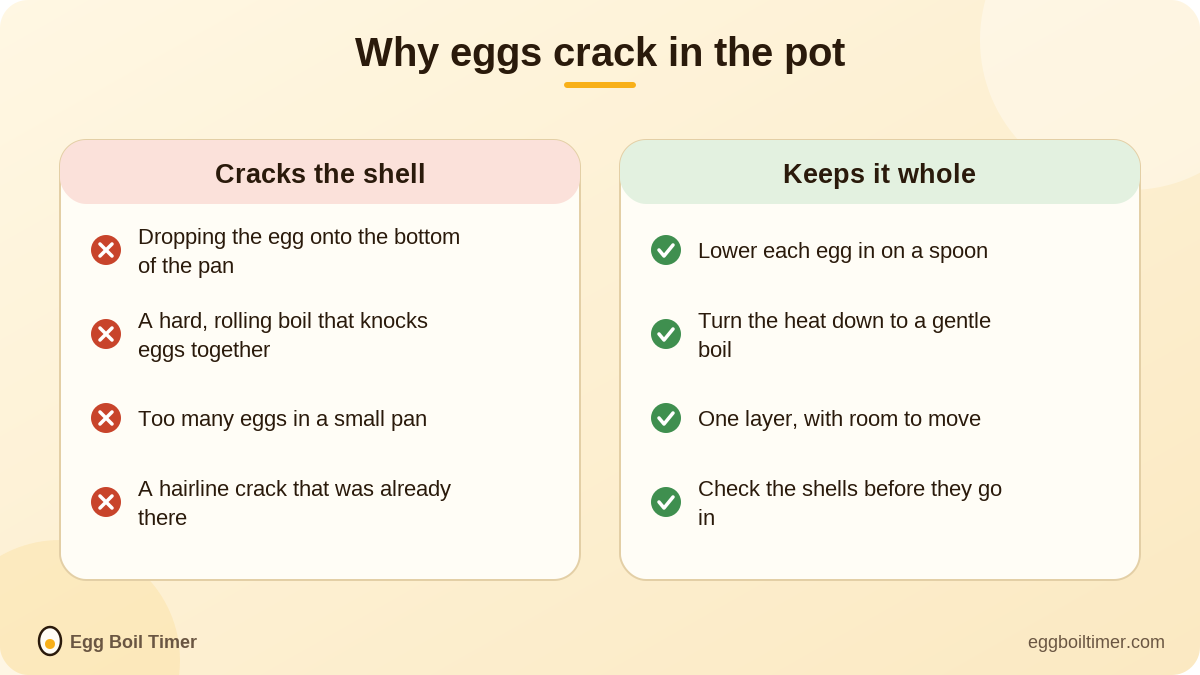
The most common cause is the simplest: the egg hits the bottom of the pan. An eggshell is strong when squeezed evenly and weak against a sharp knock. The second cause is the boil itself. In water that is boiling hard, eggs bounce off each other and off the sides of the pan for minutes.
Temperature plays a smaller part than people think. An egg straight from the fridge has a pocket of air at its wide end, and that air expands quickly in boiling water. Usually it escapes through the pores of the shell. If the shell already has a hairline crack, this is the moment it opens. Very fresh eggs bring their own problems at peeling time: Fresh Eggs Are the Worst Eggs to Boil. Here Is Why.
Four habits that stop it
- Use a spoon. Lower each egg until it rests on the bottom, then slide the spoon away.
- Turn the heat down. Once the eggs are in, a gentle boil cooks them just as fast as a violent one.
- Give them room. One layer, with space between the eggs.
- Look before you boil. Hold each egg up to the light and put aside any with a visible crack.

Does salt or vinegar help?
A spoonful of either in the water will not prevent a crack. What it can do is make the white set faster when it leaks, so a small crack seals instead of turning into a long ribbon. It is a repair, not a cure.

If an egg cracks anyway
Leave it in. It is safe to eat and will be cooked at the same moment as the others. Use it for egg salad, where the shape does not matter.
Cracking also changes nothing about the timing, and the moment you start the clock matters more than people think: You Have Probably Been Starting the Egg Timer at the Wrong Moment. Start the Egg Boil Timer when the eggs go into the water, and use the Hard Boiled Egg Timer if they are meant for the lunch box.