Two people boil the same egg for the same six minutes. One gets a runny yolk and the other gets a firm one. The difference is not the stove or the egg. It is the moment each of them started counting.
Cold start: the hidden minutes
Many people put eggs into cold water, switch on the stove and start the timer. The trouble is that nobody knows how long the water takes to boil. A small pan on a strong burner needs three minutes; a large pot on a weak one needs ten. The eggs are warming up the whole time, so the result changes every time you change the pot, the amount of water or the number of eggs.
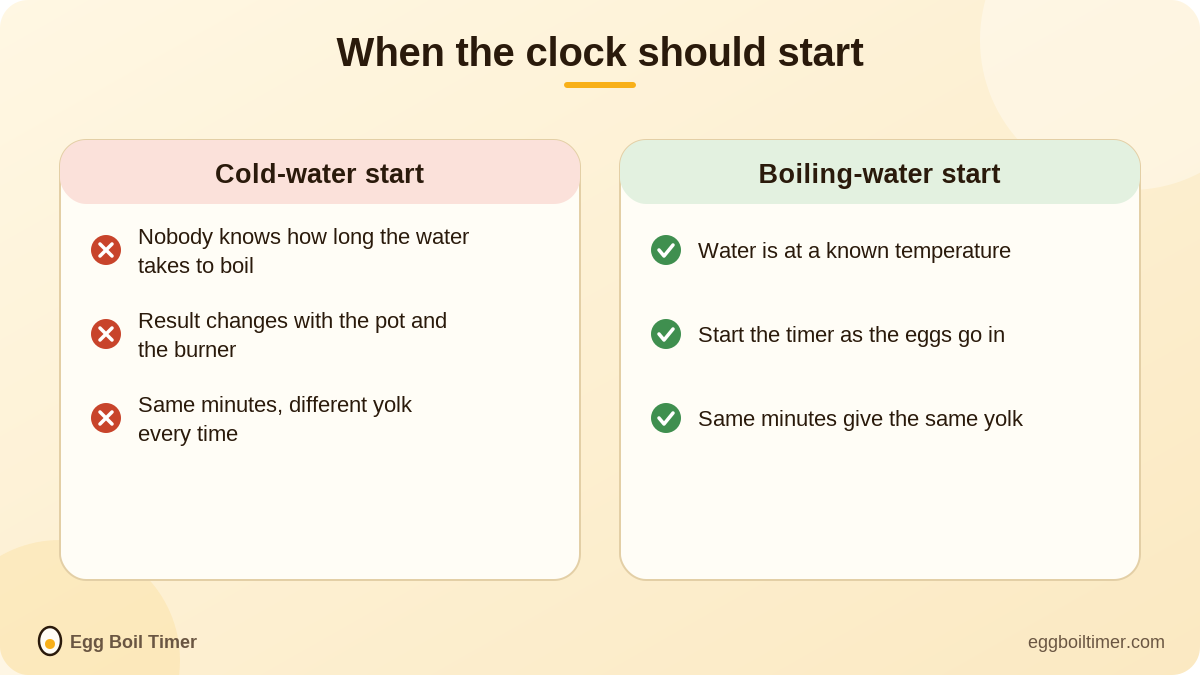
The moment that works everywhere
Bring the water to a full boil first. Lower the eggs in with a spoon. Start the timer at that moment. Now the eggs spend the whole time in water at a known temperature, and the same number of minutes gives the same yolk in any kitchen.

Three smaller mistakes
- Counting from the fridge without saying so. A fridge-cold egg needs about a minute and a half more than one at room temperature. Decide which you are using.
- Ignoring the size. Extra-large eggs need more time than medium ones for the same yolk.
- Stopping the clock but not the cooking. An egg left in the pot or on the counter keeps cooking. Move it into cold water.

Make it automatic
The Egg Boil Timer is built around this method: pick the yolk, the egg size and fridge or room temperature, press Start when the eggs go into the boiling water and take them out when it rings. For a runny yolk use the Soft Boiled Egg Timer; for salads and lunch boxes use the Hard Boiled Egg Timer.