Pasteurized eggs undergo precise, low-temperature thermal processing to destroy harmful pathogens like Salmonella enteritidis while keeping the albumen and yolk raw. This specialized heat treatment preserves the liquid state of the egg. Home cooks and professional kitchens use pasteurized eggs to prepare safe raw dressings, unbaked mousses, soft emulsions, and undercooked egg dishes without risk of foodborne illness.
Thermal Pasteurization and Egg Protein Behavior
Egg whites and yolks denature at different, predictable temperature thresholds. Albumen proteins begin setting at 62 °C (144 °F). Yolk lipoproteins begin solidifying at 65 °C (149 °F). Industrial pasteurization relies on the gap between bacterial destruction points and egg coagulation thresholds.
Commercial heat treatments hold whole shell eggs in warm water baths between 56.7 °C and 60 °C (134 °F to 140 °F). This temperature range is hot enough to achieve a 5-log reduction (99.999% destruction) of Salmonella bacteria. At the same time, it remains cool enough to prevent protein coagulation. The process leaves the shell egg intact, the yolk fluid, and the albumen functional for raw culinary applications.
Industrial Pasteurization Protocols: Time and Temperature Parameters
Commercial egg processors follow strict regulatory protocols established by food safety agencies to guarantee pathogen destruction without altering culinary utility. The process differs between intact shell eggs and bulk liquid egg products:
- Sanitization and surface washing. Shell eggs move through warm water sprays containing food-grade sanitizers. This step clears organic residue from the outer shell surface before heat treatment begins.
- Precision thermal immersion. Intact eggs rest in circulating warm water baths held between 56.7 °C and 58.3 °C (134 °F to 137 °F) for 30 to 45 minutes. Extended hold times allow heat to conduct through the porous shell into the central yolk core.
- Chilling and thermal arrest. Right after leaving the heating bath, eggs pass through a cold water shower. Immediate cooling stops residual heat conduction and preserves delicate albumen proteins.
- Protective mineral coating. Once dry, shell eggs receive a thin coating of food-grade mineral oil. This seal restores the natural cuticle layer lost during washing and prevents moisture loss during storage.
Cartoned liquid egg products use high-temperature short-time processing. Liquid whole eggs flow through stainless steel heat exchangers held at 60 °C (140 °F) for 3.5 minutes. Liquid egg whites undergo pasteurization at 55.6 °C (132 °F) for 3.5 minutes, often with added whipping aids like triethyl citrate.

Microbial Reduction and Protection for High-Risk Groups
Raw, unpasteurized shell eggs carry an internal risk from Salmonella enteritidis. Unlike external contaminants, Salmonella infects the reproductive tissue of laying hens before shell formation occurs. As a result, the bacteria reside directly inside the yolk and albumen. Standard washing does not remove internal microbes.
Public health agencies, including the USDA, FDA, and CDC, strongly advise vulnerable populations to use pasteurized eggs for any raw or lightly cooked dishes. High-risk groups include young children, pregnant women, older adults, and individuals with compromised immune systems.
Pasteurization eliminates the threat of foodborne illness without requiring eggs to be cooked to 71 °C (160 °F). This safety safeguard lets home cooks serve over-easy yolks, soft-boiled eggs, and homemade mayonnaise with complete confidence. This is general information, not medical advice.

Functional Differences: Pasteurized Versus Standard Shell Eggs
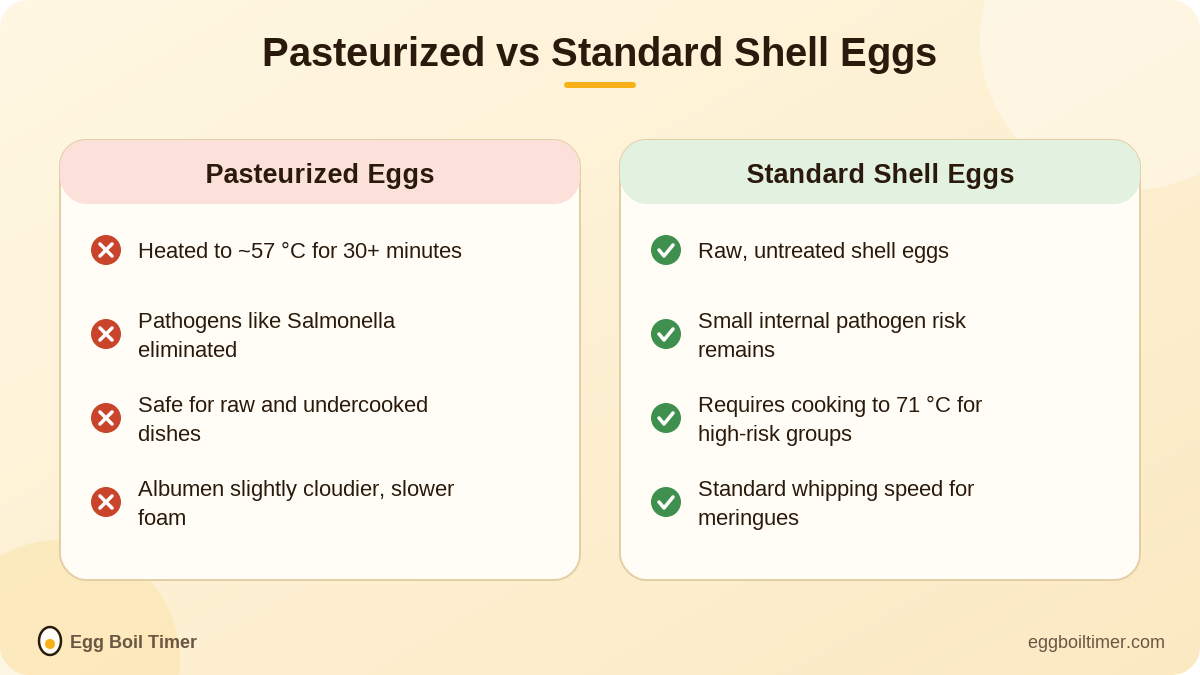
Gentle thermal pasteurization subtly affects physical properties without altering taste or nutritional value. The comparison table below outlines key differences between pasteurized and standard shell eggs.
| Feature | Pasteurized Shell Eggs | Standard Shell Eggs |
|---|---|---|
| Pathogen Status | Salmonella destroyed (5-log reduction). | Untreated internal risk present. |
| Raw Consumption Safety | Safe for vulnerable populations. | Requires cooking to 71 °C (160 °F). |
| Albumen Appearance | Slightly cloudy due to heat exposure. | Clear and translucent. |
| Whipping Time | Requires 20% to 30% longer to whip. | Standard whipping speed. |
| Refrigerated Shelf Life | 3 to 5 weeks unopened. | 3 to 5 weeks unopened. |
| Shell Identification | Stamped with a red "P" or logo. | Standard brand or grade mark. |
The most noticeable physical distinction in a fresh pasteurized egg is slightly opaque or cloudy albumen. Mild heat affects a small fraction of temperature-sensitive conalbumin proteins in the egg white. Shell color does not change this physical outcome. Whether eggs come from white hens or Brown or White: Does the Colour of the Shell Change the Boiling Time?, pasteurization produces identical albumen opacity.
Kitchen Applications and Whipping Characteristics in Unbaked Recipes
Pasteurized eggs perform exceptionally well in dishes that rely on raw yolks for structure or unbaked whites for volume:
- Raw cold emulsions. Homemade Caesar salad dressing, aioli, hollandaise, and mayonnaise rely on raw yolk lecithin to emulsify oil droplets. Pasteurized yolks produce velvety emulsions with zero microbial risk.
- Unbaked dessert foams. Tiramisu, chocolate mousse, eggnog, and royal icing depend on raw whipped yolks or whites. Using pasteurized eggs keeps these chilled desserts safe for all guests.
- Soft-cooked breakfast textures. Soft poached eggs, sunny-side-up fried eggs, and gentle French scrambles maintain rich, runny centers. Cooking for vulnerable family members becomes worry-free even below standard safe cooking temperatures. Use our Egg Boil Timer timer tool to track exact times for soft-boiled dishes.
When whipping pasteurized egg whites into meringues, add 1/8 teaspoon of cream of tartar per white. This mild acid stabilizes heat-altered proteins and helps foam reach full volume faster.
Retail Identification, Packaging Formats, and Storage Rules
Pasteurized shell eggs are available in major supermarket chains and specialty grocery stores. You can find them in the refrigerated dairy aisle near organic cartons. Cartons carry clear pasteurization labels, and individual eggshells display a food-safe stamped letter "P".
Separated liquid egg products sold in cartons (such as 100% liquid egg whites or whole egg blends) undergo pasteurization during processing. Liquid cartons offer convenience for baking, scrambles, and high-protein recipes.
Specialty eggs, such as commercial How to Boil Quail Eggs (and Peel Them Without Losing Your Mind) or large How to Boil Duck Eggs: Times for Runny, Jammy and Hard Yolks, are rarely sold pasteurized at retail. Always cook quail and duck eggs thoroughly to an internal temperature of 71 °C (160 °F). Store all pasteurized eggs in the main body of the refrigerator at or below 4 °C (40 °F).
Precision Sous Vide Pasteurization for Home Cooks
Attempting to pasteurize eggs on a conventional stovetop is unsafe. Unregulated pot temperatures fluctuate easily. Water above 60 °C cooks the egg white, while water below 56 °C fails to destroy Salmonella.
Safe home pasteurization requires a precision sous vide immersion circulator. The circulator maintains tight water bath temperatures needed for controlled heat penetration.
| Egg Size | Target Temperature | Bath Hold Time | Ice Bath Time |
|---|---|---|---|
| Medium (50 g) | 57 °C (135 °F) | 70 minutes | 20 minutes |
| Large (55 g) | 57 °C (135 °F) | 75 minutes | 20 minutes |
| Extra Large (60 g) | 57 °C (135 °F) | 80 minutes | 20 minutes |
| Jumbo (65 g) | 57 °C (135 °F) | 85 minutes | 20 minutes |
To pasteurize shell eggs at home:
- Fill a container with warm water and secure your sous vide circulator set to 57 °C (135 °F).
- Allow the bath to reach exact equilibrium at 57 °C before adding cold eggs with a slotted spoon.
- Maintain the hold time listed for your egg size. Keep water levels steady.
- Transfer eggs immediately into an ice-water bath for 20 minutes to halt cooking. Refrigerate eggs immediately after cooling.


