A salted egg is a preserved poultry egg, traditionally a duck egg, cured in saturated salt brine or salted mud paste for several weeks. Salt diffuses through the porous shell to solidify the yolk into a firm, orange sphere rich in natural fats. At the same time, the raw egg white turns into a thin, sharply salty liquid.
Amber Yolks and Brine: Understanding Salted Eggs
Preserving eggs with salt originated in East Asia, with written records dating back to the 5th century AD in Chinese agricultural texts. Rural households salted surplus duck eggs after peak laying seasons to extend shelf life without refrigeration. While fresh eggs spoil in weeks, salted duck eggs stay edible for months when kept cool.
Duck eggs remain the standard choice for curing. Their thicker shells resist cracking during long curing periods, and their yolks contain more fat than standard Chicken Eggs: Anatomy, Formation, Nutrition, and Cooking. This extra lipid content produces a rich, velvety mouthfeel after cooking. Cooks can salt chicken eggs using identical brining ratios, but the resulting yolks yield a lighter flavor and release less aromatic oil when heated.
Curing Chemistry: How Osmosis Hardens the Yolk
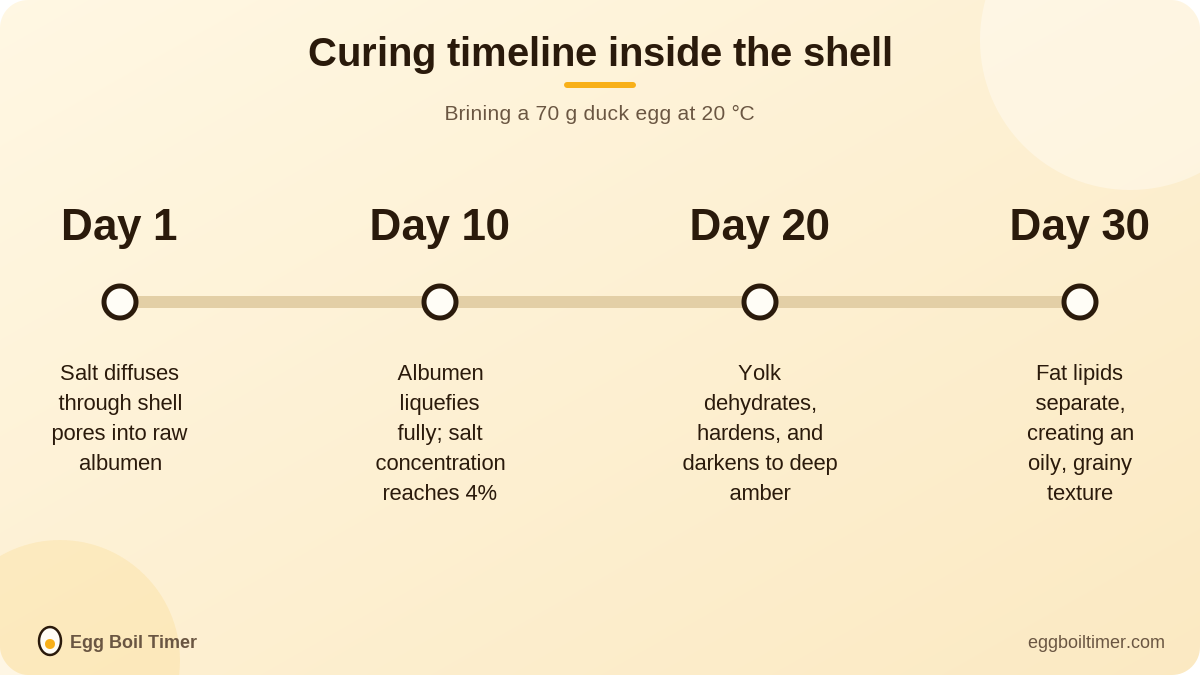
The transformation inside a brine jar relies on osmosis and protein denaturation. Sodium and chloride ions penetrate microscopic pores in the eggshell, raising the ionic concentration of the albumen. As salt levels inside rise, water molecules move out of the yolk toward the higher salt concentration in the white.
This dehydration alters the structure of the yolk's lipoproteins. Without heat, the lipids and proteins aggregate into a dense, semi-solid gel. At the same time, neutral fats within the yolk clump together, creating a distinct grainy texture and releasing free orange oil. The egg white undergoes the opposite physical change: its proteins break down and lose viscosity, turning thin and watery. When boiled, the white sets into an opaque, extremely firm solid with a sharp salt content.

Curing Methods: Brine Solution Versus Mud Paste
Two primary techniques exist for producing salted eggs. Brining submerges whole eggs in a saturated saltwater bath, while mud-curing coats individual shells in a heavy paste of salt, clay, and wood ash. Each method produces distinct physical characteristics in the final cured yolk.
| Curing Parameter. | Liquid Brine Curing. | Clay or Mud Coating. | Salted Chicken Eggs. |
|---|---|---|---|
| Preparation. | Boiled water saturated with 20–25% table salt. | Red clay, salt, water, and rice chaff paste. | Submerged in standard liquid salt brine. |
| Curing Time. | 25 to 35 days at 20 °C. | 30 to 45 days at room temperature. | 18 to 25 days (thinner shell). |
| Yolk Texture. | Firm, moderately grainy, light oil release. | Extremely oily, dense, crumbly amber core. | Softer center, lower oil content. |
| Best Application. | Home preparation, boiled table consumption. | Commercial bakery use, mooncake fillings. | Quick home cures, savory stir-fry sauces. |

Boiling and Steaming Cured Salted Eggs
Raw salted eggs require thorough cooking before serving. Unlike fresh raw eggs, the cured yolk is already semi-firm, but boiling fully sets the albumen and melts the concentrated fats in the center. Submerge cured eggs in a pot of cold water, bring to a rolling boil over medium heat, and cook for 10 to 12 minutes. For precise timing when cooking fresh, uncured waterfowl eggs, refer to our guide on How to Boil Duck Eggs: Times for Runny, Jammy and Hard Yolks or test your timing settings on Egg Boil Timer.
Steaming offers a cleaner approach when using separated raw salted yolks for baking or stir-frying. Place raw cured yolks on a heatproof plate lightly greased with oil. Steam over high heat for 7 to 8 minutes until the centers turn opaque and firm. Basting raw yolks with a splash of rice wine or sesame oil before steaming eliminates lingering metallic or gamey odors.
Flavor Pairing Matrix: Matching Salted Yolks to Dishes
Cooks use salted eggs as both a primary condiment and an aromatic seasoning base. The cured white provides sharp salinity, while the rich yolk contributes umami, color, and body to starches and fats.
| Culinary Goal. | Recommended Component. | Preparation Method. | Classic Culinary Match. |
|---|---|---|---|
| Breakfast Condiment. | Whole boiled salted egg. | Boil 12 minutes, chop in half with shell. | Plain rice congee, millet porridge. |
| Crisp Coating / Butter Sauce. | Steamed salted yolk only. | Mash steamed yolk into fine paste with butter. | Fried prawns, chicken wings, squid. |
| Traditional Pastry Filling. | Raw cured duck yolk. | Bake lightly with spirit wash before wrapping. | Mooncakes, sweet lotus seed buns. |
| Flavor Contrast. | Boiled salted egg white. | Dice finely as a seasoning substitute. | Steamed pork patties, leafy greens. |
When creating rich sauces, mash cooked yolks into molten butter over low heat until a fine foam forms in the pan. This technique releases suspended lipids, creating a smooth velvet texture that clings to crisp seafood or stir-fried vegetables. Preserve other delicacies differently: preserved foods like Century Eggs: How They Are Made, Flavor, and Safe Preparation rely on alkaline curing rather than heavy salting to gel the egg proteins.
Troubleshooting Homemade Salted Eggs
Brining eggs at home occasionally produces inconsistent results due to temperature shifts, weak salt concentrations, or shell defects. Use this reference matrix to correct issues in subsequent batches.
| Observed Defect. | Root Cause. | Corrective Action. |
|---|---|---|
| Yolk remains soft and watery after 30 days. | Salt concentration fell below saturation (20%). | Heat water, dissolve salt until crystals stop melting, cool, and re-submerge eggs. |
| Albumen is unpleasantly bitter or harsh. | Curing time exceeded 40 days in warm ambient temperatures. | Remove eggs from brine at day 28; store dry in refrigerator. |
| Eggs smell foul or liquid turns cloudy. | Microscopic shell crack permitted bacterial entry. | Discard affected eggs. Wash fresh shells thoroughly and add high-proof grain alcohol to brine. |
| Yolk sits off-center and flattens against shell. | Eggs rested in one position during the full cure. | Rotate eggs 180 degrees every 5 days inside the jar. |
Dietary Considerations: Sodium, Cholesterol, and Storage
Salted duck eggs are nutrient-dense but contain substantial amounts of sodium and dietary fats. A single boiled salted duck egg weighing approximately 75 grams supplies the following nutritional values:
- Calories: 130 kcal.
- Protein: 9 g.
- Total Fat: 9 g.
- Cholesterol: 400 mg.
- Sodium: 1000 mg.
Health guidelines established by the CDC advise adults to limit total daily sodium intake to under 2,300 mg. Consuming a single salted egg provides nearly half of that daily recommended limit. Individuals managing hypertension, cardiovascular risk, or kidney function concerns should consume salted egg products in strict moderation.
Dietary cholesterol guidelines from the American Heart Association emphasize monitoring overall saturated fat and cholesterol patterns, particularly for those with hypercholesterolemia. Pregnant women should ensure all cured eggs are heated thoroughly above 74 °C to eliminate foodborne risks, and consult healthcare providers regarding high-sodium dietary additions.
Uncooked salted eggs stored inside their original brine solution remain stable at cool room temperatures for up to 30 days. Once cooked, store hard-boiled salted eggs in a sealed container inside the refrigerator and consume them within 3 weeks. Discard any egg displaying an unnatural greyish albumen, slimy texture, or sulfurous odor.


