Custard is a cooked emulsion of milk or cream and eggs. Heat unravels yolk proteins into a matrix that traps liquid. A standard baked custard uses 4 large egg yolks per 480 ml of whole milk. Heating between 80 °C and 85 °C (175 °F to 185 °F) sets the mixture without curdling.
Protein Chemistry in Yolks and Albumen
Custard relies on egg proteins rather than starches for structure. Albumen in egg whites begins coagulating at 62 °C (144 °F). It forms a firm gel by 80 °C. Lipovitellin and livetin in yolks begin coagulating at 65 °C (149 °F). Yolks set fully at 70 °C when heated alone.
Diluting egg yolks in milk and sugar alters these thermal boundaries. Milk water and butterfat disperse protein molecules. Sugar binds with water to slow down protein linking. This raises the yolk coagulation threshold to 80 °C–85 °C.
Egg yolks also provide natural lecithin. This powerful emulsifier binds water and butterfat into a smooth liquid. Yolks alone create a pourable sauce or soft cream. Adding egg whites introduces albumen, which holds clean edges when sliced in a pie.
If you have leftover egg whites, whip them into a crisp Mastering Meringue: French, Swiss, and Italian Techniques. They also work in recipes calling for a liquid binder like a Flax Egg White Guide: Ratios, Baking Uses, and Whipping Limits gel.
Temperature Windows and Water-Bath Thermodynamics
Precise temperature control determines your custard's texture. Between 80 °C and 85 °C, yolk proteins link loosely to trap liquid. Heating past 85 °C (185 °F) triggers over-coagulation.
Overheated protein strands contract tightly and squeeze out trapped liquid. Culinary scientists call this syneresis, commonly known as weeping or curdling. The smooth cream collapses into rubbery clumps floating in watery whey.
Sugar and fat shield proteins against overheating. Sugar molecules sit between protein chains to delay coagulation. Butterfat from whole milk or cream coats proteins, preventing rapid clumping.
Baking custards in a water bath, or bain-marie, provides essential thermal insulation. Water cannot exceed 100 °C (212 °F) at sea level. Surrounding ramekins with hot water buffers them from harsh oven heat. This bath ensures gentle, even heat transfer. Tracking time accurately matters just as much here as when timing soft eggs on our Egg Boil Timer egg timer.

Formula Matrix for Sauces, Baked Gels, and Pastry Creams
Adjusting proportions of egg yolks, whole eggs, sugar, and starch alters custard density. These ratios determine whether you get a sauce, spoonable pot, or sliceable filling.
| Custard Style | Egg Base per 480 ml Dairy | Thickener & Fat Level | Coagulation Set Point | Primary Culinary Application |
|---|---|---|---|---|
| Crème Anglaise. | 4 to 6 Egg Yolks. | Yolk lecithin and proteins. | 80 °C to 83 °C. | Pourable dessert sauce for cakes and fruit. |
| Baked Pot de Crème. | 4 Egg Yolks + 1 Whole Egg. | Yolks plus light albumen set. | 82 °C to 85 °C. | Delicate, spoonable ramekin dessert. |
| Custard Pie Filling. | 3 Large Whole Eggs. | Full albumen protein matrix. | 85 °C. | Firm set gel for sliceable pies and tarts. |
| Pastry Cream (Crème Pâtissière). | 4 Egg Yolks. | Yolks + 30 g Cornstarch. | 95 °C to 100 °C (Boiled). | Thick, pipeable filling for éclairs and puffs. |
Pastry cream differs from pure egg custards because it includes starch. Cornstarch gelatinizes around 80 °C, absorbing liquid and swelling into a mesh. This starch matrix physically stops egg proteins from clumping.
Pastry cream must reach a gentle boil for one full minute. Boiling deactivates alpha-amylase, an enzyme present in raw egg yolks. Without boiling, alpha-amylase breaks down starch chains and turns stored pastry cream watery.

Protocol for a Classic Baked Vanilla Custard
This traditional recipe produces four 120 ml ramekins of rich, smooth baked custard with a delicate wobble.
Ingredients Base
- 480 ml (2 cups) whole milk or equal parts milk and heavy cream
- 4 large egg yolks (approximately 70 g total yolk weight)
- 50 g (1/4 cup) granulated sugar
- 5 ml (1 tsp) pure vanilla extract
- 1 g (1/8 tsp) fine sea salt
Preparation Sequence
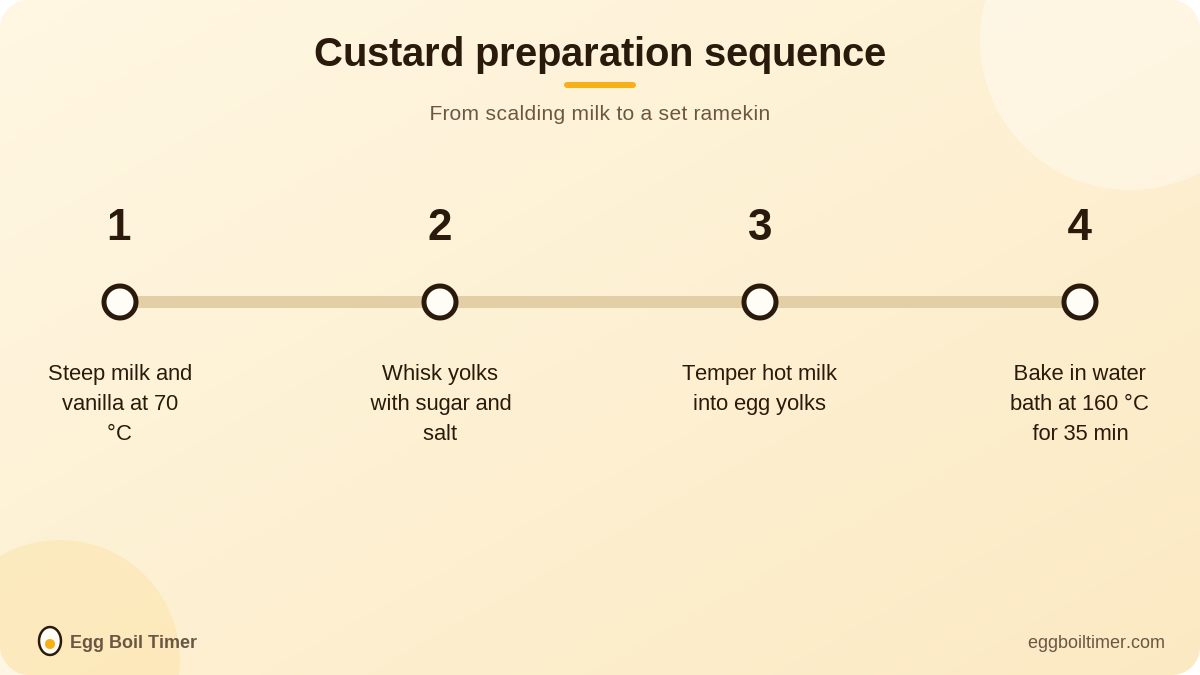
- Warm the dairy: Pour 480 ml whole milk and 5 ml vanilla extract into a saucepan. Warm over medium heat until steam wisps appear around the edges at roughly 70 °C. Remove from heat before it boils.
- Whisk the egg base: Place 4 egg yolks, 50 g sugar, and 1 g salt in a heatproof bowl. Whisk gently until combined. Keep whisking low to avoid thick surface foam.
- Temper the yolks: Slowly pour 120 ml of warm milk into the egg yolks while whisking. This tempering step raises egg temperature without creating cooked specks. Gradually whisk in the remaining hot milk.
- Strain the liquid: Pour the mixture through a fine mesh sieve into a measuring glass. Straining removes chalazae strands and air bubbles for a uniform surface.
- Bake in a water bath: Divide liquid among four 120 ml heatproof ramekins. Place ramekins inside a deep baking dish. Fill the dish with hot tap water halfway up the ramekin sides. Bake at 160 °C (325 °F) for 35 to 40 minutes. The edges should feel set while the center wobbles slightly. Cool at room temperature, then chill for two hours.
Diagnosing Curdling, Graininess, and Separation
Most custard errors stem from temperature mistakes or minor prep oversights. Quick steps can often save damaged batches.
- Curdled or scrambled sauce: Overheating past 85 °C forces egg proteins to contract and separate from fat. To recover stovetop custard, pour warm liquid into a blender. Add 15 ml (1 tbsp) of cold heavy cream and blend on high speed for 30 seconds. Mechanical shear breaks protein clumps while cold fat re-emulsifies the sauce. Strain through a fine sieve before serving.
- Grainy texture on the tongue: Sugar left sitting on raw egg yolks draws out moisture through osmosis. This leaves hard yellow flecks. Always whisk sugar into egg yolks immediately.
- Watery or under-set center: The custard came off heat before yolk proteins reached 80 °C. Return stovetop custard to low heat, stirring until it coats a spoon. For baked custards, return ramekins to the warm water bath for 5 to 10 minutes.
- Rubbery skin on the surface: Evaporation during chilling creates a tough protein film on top. Prevent skin formation by pressing plastic wrap directly onto warm custard before refrigerating.
Infusing Aromatics and Fat-Soluble Flavors
Infusing hot dairy before tempering adds flavor without disturbing protein ratios.
Fat-soluble aromatics extract efficiently into warm milk fats. Add whole coffee beans, crushed cardamom pods, cinnamon sticks, or citrus peel to milk. Heat to 70 °C, remove from heat, cover, and steep for 20 minutes. Strain out solids before reheating milk and tempering into yolks.
For chocolate custard, add 60 g of finely chopped 70% dark chocolate to warm milk. Whisk until melted before tempering into yolks. Cocoa butter adds extra fat, creating a firmer, glossier texture once chilled.
When adding fruit purees or citrus juice, pick low-acid options. Alternatively, fold reduced purees into cooked pastry cream after it cools. High acidity lowers milk pH, causing dairy proteins to curdle without heat.
Chilling Dynamics and Storage Rules
Proper chilling stabilizes egg protein gels and ensures food safety.
Cool baked ramekins at room temperature for 30 minutes before refrigerating. Placing hot ramekins in a cold fridge traps condensation under plastic wrap. This causes water to pool on top.
Store cooked custards tightly sealed in the refrigerator at 4 °C (40 °F) or below. Consume egg yolk custards within 3 to 4 days. Avoid freezing traditional egg custards. Freezing expands trapped water into ice crystals. These crystals tear the protein matrix and cause weeping upon thawing.


