Keto eggs serve as a staple on low-carbohydrate regimens because a single large egg delivers 4.8 grams of fat, 6.3 grams of protein, and only 0.4 grams of total carbohydrates. This macronutrient ratio naturally promotes ketosis. In this metabolic state, the liver metabolizes dietary and bodily fatty acids into ketones rather than running on blood glucose.
Macronutrient Profile and Ketone Production
Maintaining ketosis requires limiting daily carbohydrate intake to a tight window, typically between 20 and 50 grams of net carbs. Crossing that threshold triggers an insulin spike. That insulin rise halts fatty acid oxidation in the liver and stalls ketone generation.
A standard large egg contains roughly 0.4 grams of total carbohydrates. You can eat four or five eggs in a meal without challenging your daily carbohydrate ceiling. The distribution of energy inside an egg matches ketogenic targets exceptionally well.
A standard ketogenic protocol draws 70 to 75 percent of calories from fats, 20 to 25 percent from protein, and 5 to 10 percent from carbohydrates. A plain boiled egg provides roughly 63 percent of its caloric energy from fat and 35 percent from protein. Frying or scrambling that same egg in butter, avocado oil, or bacon drippings easily shifts the fat ratio above 75 percent.
Eggs also stabilize daily hunger signals. High-carbohydrate meals often cause rapid blood sugar surges followed by reactive insulin crashes. In contrast, eggs release amino acids and fatty acids slowly through the gastrointestinal tract. This steady digestion suppresses ghrelin, the primary hunger hormone, for hours after eating.
Choline, Micronutrient Density, and Liver Metabolism
Cutting grain products, starchy tubers, and sugars narrows dietary micronutrient variety unless you choose nutrient-dense whole foods. Whole eggs prevent common nutritional shortfalls by packing essential vitamins, minerals, and fatty compounds directly into the yolk matrix.
Choline stands out as a critical nutrient for low-carbohydrate dieters. A single large egg delivers 147 milligrams of choline, supplying over a quarter of an adult's daily requirement. The liver relies on choline to produce phosphatidylcholine, a molecule required to assemble very-low-density lipoproteins.
These lipoproteins transport triglycerides out of liver tissue and into peripheral circulation. When someone burns dietary and body fat at high rates, adequate choline prevents abnormal fat accumulation within hepatic cells. Without sufficient dietary choline, fatty liver symptoms can emerge even during significant weight reduction.
Whole eggs also provide significant amounts of fat-soluble vitamins A, D, and E. These micronutrients require co-ingested dietary lipids for proper intestinal absorption. Additionally, eggs supply bioavailable selenium for thyroid hormone conversion and vitamin B12 for red blood cell formation. Consult our guide to Egg Calories: Exact Counts by Size, Component, and Cooking Style to see how different egg sizes fit into your exact caloric targets.

Daily Limits, Lipid Panels, and Individual Sensitivity
Eating three to six whole eggs daily is common practice among ketogenic dieters. Scientific research indicates that dietary cholesterol intake affects circulating serum cholesterol differently across individuals, driven primarily by genetics and insulin sensitivity.
Dietary cholesterol does not translate directly into circulating blood cholesterol for the majority of the population. Around 70 percent of people are classified as hypo-responders. In these individuals, the liver downregulates its internal cholesterol synthesis when dietary intake increases, maintaining stable blood lipid balances.
The remaining 30 percent of the population are hyper-responders. When hyper-responders consume higher amounts of dietary cholesterol, both low-density lipoprotein (LDL) and high-density lipoprotein (HDL) levels climb simultaneously. For most low-carb eaters, triglycerides decline sharply while HDL rises, improving the overall triglyceride-to-HDL cardiovascular ratio.
People with familial hypercholesterolemia, preexisting heart disease, or type 2 diabetes require careful medical supervision before adopting high-cholesterol eating patterns. If you increase your daily egg intake substantially, request an advanced lipid panel four to six weeks later. Monitoring Apolipoprotein B and LDL particle numbers offers a far more accurate assessment of vascular risk than standard total cholesterol markers alone.

Albumen Versus Yolk: Managing Fat and Protein Ratios
A frequent mistake during the transition to keto is ordering or cooking egg-white scrambles to reduce calories. Discarding the golden yolk removes the exact healthy fats, fat-soluble vitamins, and choline required to support a fat-adapted metabolism.
| Component | Energy (kcal) | Fat (g) | Protein (g) | Carbohydrates (g). |
|---|---|---|---|---|
| Whole Egg | 72 | 4.8 | 6.3 | 0.4 g. |
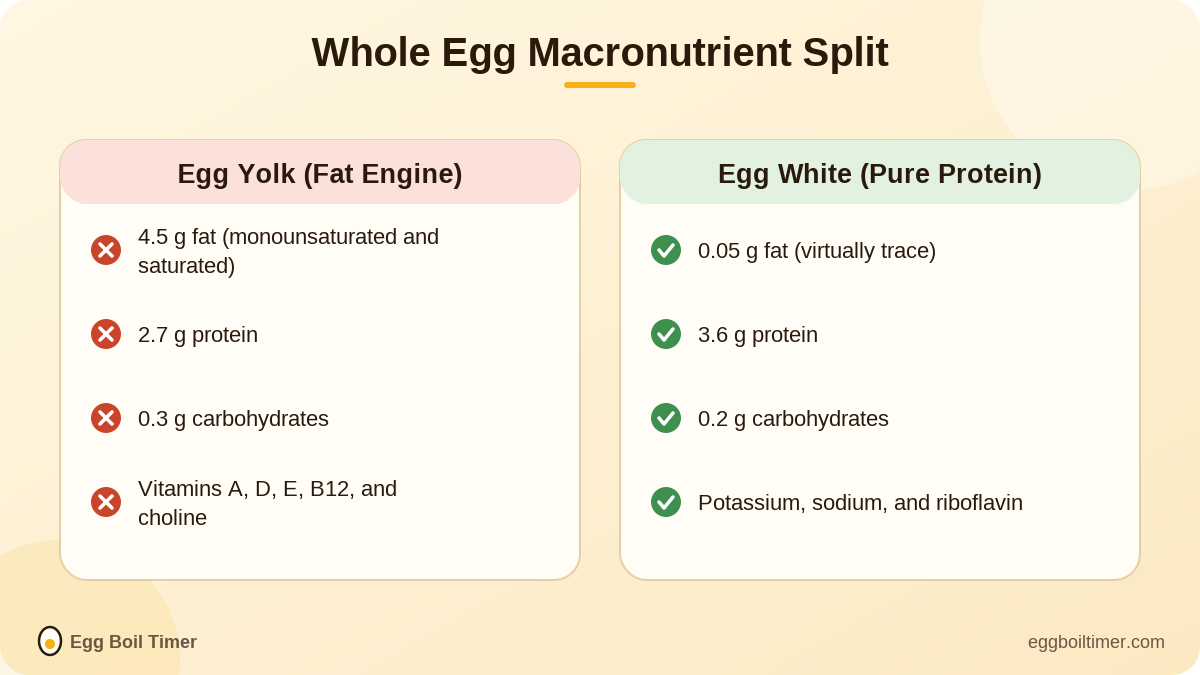
| Yolk Only (17 g) | 55 | 4.5 | 2.7 | 0.3 g. |
| White Only (33 g) | 17 | 0.05 | 3.6 | 0.2 g. |
Egg whites consist almost entirely of water and pure albumin protein. Consuming large portions of egg whites without added fat leaves you unsatisfied and triggers earlier hunger. Excessive protein intake without sufficient dietary fat can also provoke mild gluconeogenesis, where surplus amino acids are converted into glucose by the liver.
Our comprehensive analysis of Eggs Protein: Exact Grams, Amino Acids, and Daily Targets explains how heat alters amino acid structures and protein bioavailability. For ketogenic cooking, prepare whole eggs, or enrich a whole-egg scramble by folding in an extra yolk to increase the proportion of healthy fats.
Cooking Methods, Healthy Fats, and Pan Chemistry
Preparing eggs for a ketogenic diet involves selecting cooking fats that remain stable under heat while enriching the fat profile of the finished dish. Butter, clarified ghee, virgin coconut oil, and animal tallows perform reliably in skillet cooking.
When cooking scrambled eggs, gentle heat prevents moisture expulsion. High stove temperatures cause the ovalbumin proteins to contract abruptly, squeezing out water and leaving a pool of liquid on your plate. Cook your beaten eggs over medium-low heat with cold cubed butter, stirring continuously until soft, creamy curds develop.
Fried eggs benefit from cooking fats with high smoke points like avocado oil or tallow. Basting the hot oil over the albumen sets the clear white while leaving the yolk glossy and fluid. Dipping low-carb vegetables into warm liquid yolk provides an easy way to ingest healthy fats without relying on manufactured sauces.
Hard-boiled and soft-boiled eggs serve as ideal portable options for ketogenic meal preparation. Boiling requires precise timing to avoid rubbery whites and unappealing green outer rings on the yolk. Use the interactive timer on Egg Boil Timer to calculate exact boiling durations based on your egg size and starting temperature.
The Keto Chaffle: Replacing Flour with Eggs and Cheese
The chaffle represents one of the most practical culinary innovations in low-carbohydrate cooking. Made by whisking together one large egg and one-half cup of finely shredded cheese, this mixture cooks in a standard mini waffle iron in under four minutes.
The chemistry of a chaffle relies on heat-induced protein coagulation. As the egg heats against the iron plates, the albumen and yolk proteins denature and bond into a continuous scaffolding. Meanwhile, the shredded cheese melts and fries against the textured metal.
The melted cheese forms a rigid, crisp crust that mimics the structural crunch of toasted grain bread. Because it contains zero flour, starches, or industrial gums, a plain chaffle yields less than one gram of net carbohydrates. It functions as a sturdy bun for burgers, a base for breakfast sandwiches, or a savory low-carb snack.
Protocols and Nutritional Realities of the Keto Egg Fast
The keto egg fast is a short-term, highly restrictive dietary protocol used to break extended weight loss plateaus. It is designed solely as a brief metabolic intervention lasting three to five consecutive days. It is not a permanent lifestyle plan.
The structured protocol follows five primary rules.
- Eat at least six whole eggs every day, having the first egg within thirty minutes of waking.
- Consume an egg-based meal every three to five hours, regardless of whether intense hunger is present.
- Incorporate one tablespoon (15 grams) of pure butter, mayonnaise, or healthy fat for every whole egg consumed.
- Limit full-fat cheese to a maximum of 28 grams per egg, capping total daily cheese intake at 170 grams.
- Conclude all food intake at least three hours before going to sleep at night.
An egg fast works largely by drastically depleting liver glycogen stores and shedding bound intracellular water. However, the protocol provides virtually no dietary fiber, negligible vitamin C, and very limited potassium. Extending an egg fast beyond five days risks micronutrient shortages, sluggish digestion, and extreme food aversion. Treat it as an occasional plateau-breaking measure rather than a regular habit.
Decision Matrix: Is an Egg Fast Appropriate for You?
Restricting your diet strictly to eggs, butter, and cheese creates significant physiological demands. Review each health profile below before starting an egg fast.
| Health Profile or Goal | Suitability | Recommended Strategy. |
|---|---|---|
| Stalled Weight Loss (4+ Weeks) | Appropriate. | Execute a strict 3-day protocol, then transition immediately back to nutrient-dense whole foods. |
| First Month of Keto Diet | Inadvisable. | Focus on steady keto-adaptation, electrolyte mineral balance, and varied whole meals instead. |
| Intense Strength or Endurance Training | Inadvisable. | Avoid extreme deficits. Restricted energy intake compromises muscular recovery and workout capacity. |
| History of Gallbladder Removal or Disease | Contraindicated. | Do not attempt. Sudden surges of concentrated fat provoke painful biliary and digestive spasms. |
| Preexisting Kidney Impairment | Contraindicated. | Avoid high-concentration protein cycling without explicit supervision from your nephrologist. |
Solving Constipation, Sulfur Odors, and Taste Fatigue
Transitioning to an egg-heavy dietary pattern can generate unwanted digestive side effects if baseline hydration and micronutrient intake slip. Recognizing the underlying physiological causes allows you to resolve these issues quickly.
Constipation represents the most frequent complaint among high-egg consumers. Whole eggs are digested almost completely in the upper gastrointestinal tract, leaving minimal residue to stimulate peristalsis in the colon. When low-carb dieters cut out high-fiber vegetables, transit times slow down noticeably.
To restore regular bowel motility, drink at least two and a half liters of water daily. Increase your sodium intake to support intestinal fluid balance, and accompany egg meals with leafy greens like baby spinach, arugula, or mashed avocado. Incorporating one to two tablespoons of ground flaxseed or chia seeds provides gentle bulk without disturbing ketosis.
Egg fatigue happens when meals lack textural and sensory variety. Eating identical scrambled eggs morning after morning triggers psychological and sensory taste aversion. Overcome this fatigue by varying your cooking preparations regularly.
Bake savory egg frittatas packed with broccoli florets and cheddar, prepare rich deviled eggs whipped with Dijon mustard and olive oil mayonnaise, or roll thin egg crepes around smoked salmon. Changing texture from soft curds to crisp fried edges prevents monotony and keeps low-carb eating enjoyable.
Pasture-Raised Versus Conventional: Omega Ratios and Nutrients
Hen living conditions and nutrition directly influence the fatty acid profile and micronutrient concentration of the egg. While all fresh eggs remain inherently low in carbohydrates, conscious carton selection provides meaningful nutritional advantages.
Pasture-raised hens roam outdoor fields with continuous access to sunlight, wild grasses, seeds, and insects. This diverse natural diet enriches the egg yolk with higher amounts of omega-3 fatty acids, vitamin E, and carotenoid antioxidants like lutein and zeaxanthin. These natural pigments produce deep orange, nutrient-dense yolks.
Look for cartons carrying certified pasture-raised designations when purchasing groceries. Terms like cage-free indicate that hens live unconfined by battery cages, though they frequently remain inside crowded indoor barns without outdoor access. Cartons marked free-range guarantee outside access, but the outdoor space may consist of a small gravel lot with limited foraging opportunity.
If pasture-raised eggs fall outside your grocery budget, standard supermarket eggs still deliver identical core macronutrients and reliable protein for ketosis. Prioritize consistency and proper cooking technique over expensive labels when building your low-carb routine.


