Aquafaba chocolate mousse is a plant-based dessert made by whipping canned chickpea liquid into stiff peaks. The aerated foam is then folded with melted dark chocolate. Combining 150 ml of aquafaba with 150 grams of 70% dark chocolate creates four rich servings. A quarter teaspoon of cream of tartar stabilizes the foam so it sets firmly within three hours in the refrigerator.
Molecular Action of Chickpea Water in Mousse
The viscous liquid drained from a canned chickpea jar acts as a direct substitute for raw Flax Egg White Guide: Ratios, Baking Uses, and Whipping Limits. During industrial canning, chickpeas are boiled under high pressure. This process releases soluble carbohydrates, saponins, and plant proteins into the surrounding water. Globulins and albumins make up the primary protein fractions in this liquid. These molecules concentrate into a water-soluble fluid capable of trapping air when agitated with a whisk.
Saponins lower the surface tension of water, allowing air bubbles to form quickly during initial beating. Proteins line the interface between water droplets and air pockets. Under mechanical stress, these proteins denature slightly to form a flexible, semi-rigid film around each bubble. Adding a quarter teaspoon of cream of tartar introduces tartaric acid, lowering the mixture's pH. This lower pH prevents protein strands from bonding too tightly or breaking down. It stabilizes the tiny air pockets so the foam retains its height during folding.
Reducing Chickpea Liquid for Maximum Foam Density
Chickpea liquid density varies significantly between canned brands and home-cooked batches. Standard commercial liquid contains approximately 1% to 1.5% protein by weight. If the liquid feels thin or watery, reducing it on the stove concentrates the active proteins and saponins. Measure 200 ml of canned chickpea liquid into a wide saucepan. Simmer over medium heat for five to seven minutes until the volume reduces to 150 ml.
The reduced liquid should feel slightly viscous, resembling raw egg albumen when cooled. Allow the concentrated liquid to chill in the refrigerator to 4 °C before whipping. Cold temperatures increase liquid viscosity, allowing beaters to shear the liquid more efficiently. Using reduced aquafaba increases foam stability by roughly 30%. It also eliminates the risk of water weeping into the bottom of serving glasses as the mousse sets.

Selecting Dark Chocolate by Cocoa Mass and Fat Ratio
Chocolate provides the structural framework for aquafaba mousse once chilled. When chocolate cools below 28 °C, cocoa butter crystallizes into a solid fat matrix that locks air bubbles in place. Dark chocolate containing 60% to 70% cocoa solids delivers enough fat to solidify the mousse without overburdening the protein foam.
| Chocolate Type | Cocoa Solids | Added Sugar | Final Mousse Texture |
|---|---|---|---|
| Bittersweet Dark | 70% to 75% | Low | Firm, velvety, deep cocoa bitterness |
| Semi-Sweet Dark | 55% to 65% | Moderate | Balanced, smooth, medium firm |
| Vegan Milk Alternative | 35% to 45% | High | Soft, lower set, needs chilled bowl |
| Unsweetened / Cocoa Mass | 100% | None | Dense, dry, requires extra sweetener syrup |
Avoid baking chips or low-fat cocoa powder blends. Baking chips contain added emulsifiers like soy lecithin that alter chocolate viscosity. Cocoa powder lacks the solid cocoa butter required to set liquid aquafaba into a sliceable mousse. Similar structural principles apply when aerating sugar matrixes for crisp vegan Mastering Meringue: French, Swiss, and Italian Techniques batches.

Ratio and Method for Four Portions
This recipe relies on accurate temperature management and gentle folding. Ensure all mixing bowls, beaters, and spatulas are entirely grease-free before starting, as tiny oil residues cause protein structures to unravel.
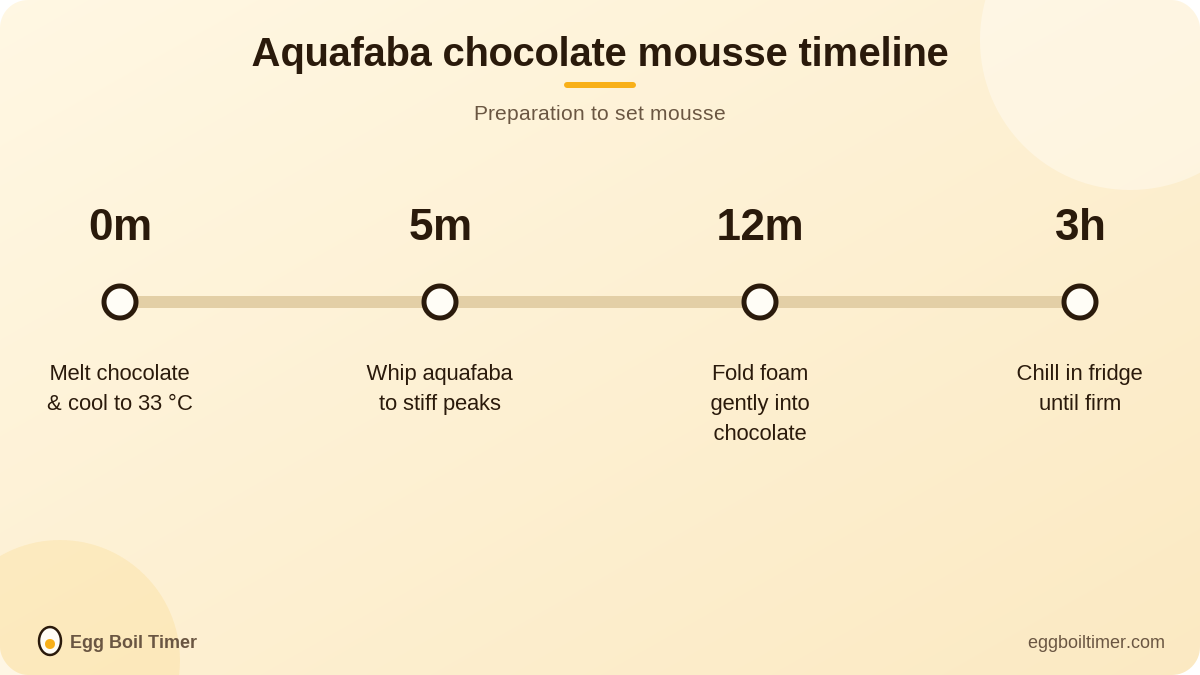
- Melt the chocolate base. Chop 150 grams of 70% dark chocolate into equal pieces. Place them in a heatproof glass bowl over a pot of barely simmering water, ensuring the bottom of the bowl does not touch the water. Stir gently until completely melted. Remove from heat and cool until it drops to 33 °C to 35 °C.
- Prepare the chickpea liquid. Drain one 400-gram can of salt-free chickpeas through a fine mesh strainer, collecting 150 ml of chickpea liquid. Pour the liquid into a clean glass bowl and add 1/4 teaspoon of cream of tartar.
- Whip to stiff peaks. Beat the liquid on medium speed with an electric hand mixer for two minutes until frothy. Increase speed to high and beat for five to seven minutes until glossy, white stiff peaks form. Add two tablespoons of fine caster sugar, whipping for another 60 seconds.
- Fold chocolate into foam. Pour one-third of the whipped aquafaba into the warm melted chocolate. Whisk vigorously to loosen the dense chocolate mixture. Gently pour the remaining aquafaba over the chocolate, folding with a silicone spatula in smooth, circular strokes until no white streaks remain.
- Portion and chill. Spoon the mousse into four glass ramekins. Transfer to the refrigerator and chill for a minimum of three hours, or until completely firm to the touch.
Whipping Dynamics and Peak Stabilization
Achieving stable peaks requires more mechanical whipping time than traditional egg foams. Raw egg whites reach firm peaks within four minutes. Chickpea liquid requires up to eight minutes of continuous high-speed whipping due to lower protein concentrations per gram of water.
Over-whipping aquafaba does not curdle or separate into water and grain like dairy cream, but it can dry out the foam. Dry foam creates air gaps that collapse when coming into contact with warm cocoa lipids. Stop whipping as soon as the peak holds its shape on lifted beaters without slumping. Those familiar with classic egg-based aerated desserts like How to Make a Soufflé: Ratios, Rise Science, and Recipe will recognize the importance of stopping right at peak volume.
Fixing Grainy Textures, Collapse, and Beany Off-Flavors
Small changes in fat temperature or humidity can disrupt the balance between chocolate and whipped foam. Use these remedies to recover damaged batches.
- Chocolate seizes during folding: If melted chocolate drops below 30 °C, pouring cold foam into it causes cocoa butter to solidify instantly into hard grains. Warm the chocolate bowl over a pot of warm water for ten seconds while whisking in two teaspoons of warm water until smooth again.
- Aquafaba refuses to whip: Fluid from organic canned chickpeas can occasionally be too dilute. Pour the liquid into a saucepan and simmer over medium heat for five minutes to reduce volume by 25%. Chill completely before whipping.
- Liquid pool at the bottom of ramekins: Under-whipped aquafaba or aggressive folding breaks the air bubbles, letting liquid seep out as the mousse chills. Fold using a sweeping motion from the bottom center up toward the edge of the bowl.
- Noticeable chickpea flavor: Low-grade dark chocolate allows legume flavors to carry through. Use vanilla extract, a pinch of fine salt, or 70% dark chocolate with natural fruity acidity to mask legume notes completely.
- Mousse remains soft after chilling: Chocolate with less than 50% cocoa solids lacks sufficient cocoa butter to set firmly. Melt an additional 30 grams of 80% dark chocolate, fold it into a new batch, or serve the soft mousse layered over vegan Pavlova Recipe: How to Make a Crisp Meringue Base bases.
For traditional whole-egg desserts that set through heat denaturation rather than lipid cooling, see our guides on classic Custard Recipe and Science: Perfecting Egg-Thickened Creams and baked Classic Crème Brûlée: The Science of Silky Custard.
Chilling Conditions and Serving Protocol
Cooling aquafaba mousse in a cold environment is necessary to set cocoa fats properly. Refrigerate covered ramekins at 3 °C to 5 °C for at least three hours. Resting overnight improves depth of flavor and produces a firmer bite similar to traditional butter-based mousses.
Serve chilled directly from the refrigerator. Top with fresh raspberries, shaved dark chocolate flakes, or coarse sea salt to contrast the rich cocoa body. Store leftover mousse covered in the refrigerator for up to four days. Do not freeze aquafaba mousse, as ice crystals rupture delicate protein cell walls, causing the structure to melt into liquid upon thawing. If you also cook whole eggs for breakfast or baking, use our Egg Boil Timer calculator to dial in baseline boiling times.


