Comparing egg vs chicken breast comes down to macronutrient density versus micronutrient diversity. Chicken breast provides 22.5 grams of protein per 100 grams with minimal fat, making it superior for lean protein volume. Whole eggs yield 12.6 grams of protein alongside rich dietary fats, choline, and fat-soluble vitamins that support cellular health.
Comparing Protein, Fat, and Calories Across Standard Servings
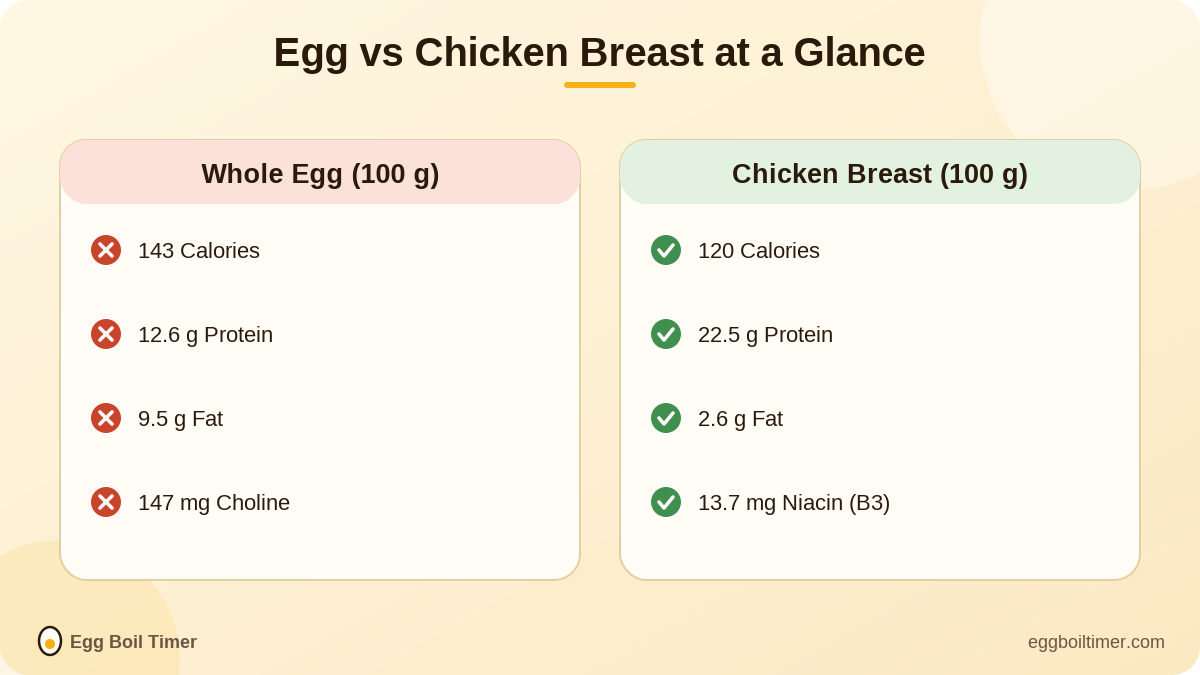
Raw macronutrient numbers highlight clear trade-offs between the two foods. Skinless chicken breast stands out for protein density. Per 100 grams raw weight, it supplies 120 calories, 22.5 grams of protein, 2.6 grams of fat, and zero carbohydrates. The meat provides raw amino acids for muscle tissue with almost no accompanying fat.
Whole eggs bring a wider range of nutrients. Per 100 grams of raw egg (roughly two large eggs), you get 143 calories, 12.6 grams of protein, 9.5 grams of fat, and 0.7 grams of carbohydrates. The white holds protein, while the yolk holds lipids, including saturated, monounsaturated, and polyunsaturated fats. Tracking total Egg Calories: Exact Counts by Size, Component, and Cooking Style">eggs calories helps show how those yolk fats fit into your daily energy target.
| Nutrient | Raw Whole Egg (100 g) | 2 Large Eggs (100 g) | Raw Chicken Breast (100 g) | 1 Breast Portion (150 g) |
|---|---|---|---|---|
| Calories | 143 kcal | 143 kcal | 120 kcal | 180 kcal |
| Protein | 12.6 g | 12.6 g | 22.5 g | 33.75 g |
| Total Fat | 9.5 g | 9.5 g | 2.6 g | 3.9 g |
| Saturated Fat | 3.1 g | 3.1 g | 0.7 g | 1.05 g |
| Carbohydrates | 0.7 g | 0.7 g | 0 g | 0 g |
| Cholesterol | 372 mg | 372 mg | 73 mg | 109.5 mg |
Matching the 33.75 grams of protein in a 150-gram chicken breast requires five large eggs. Those five eggs carry 357 calories and 23.7 grams of fat. When relying on Eggs Protein: Exact Grams, Amino Acids, and Daily Targets">eggs protein for large muscle-building targets, you have to account for those extra calories.
Vitamins and Minerals: Choline and Lutein Versus Niacin and Vitamin B6
While chicken breast wins on protein per calorie, whole eggs deliver far more micronutrients. Most of that nutrition sits in the yolk. A two-egg serving supplies roughly 294 milligrams of choline, meeting over half of an adult's daily requirement. Choline builds cell membranes and creates acetylcholine, a neurotransmitter essential for memory and muscle function.
Eggs also contain lutein and zeaxanthin. These antioxidants settle in the retina, where they filter high-energy blue light and shield eye tissue from oxidative damage. The yolk also holds fat-soluble vitamins D, A, and E, alongside bioavailable iron, phosphorus, and zinc.
Chicken breast focuses its micronutrient value on metabolic B-vitamins. A 100-gram serving delivers over 13 milligrams of niacin (vitamin B3), along with substantial vitamin B6. These two vitamins help cells convert carbohydrates and fats into active energy.
Poultry also provides selenium and phosphorus for thyroid function and bone health. But chicken breast lacks fat-soluble vitamins and offers almost no choline compared to eggs.

Dietary Cholesterol in Yolks Versus the Lean Profile of Poultry
Dietary cholesterol remains a frequent point of comparison between eggs and poultry. Two large eggs contain roughly 372 milligrams of cholesterol concentrated entirely within the yolk sac. Skinless chicken breast contains only 73 milligrams per 100-gram serving.
Clinical research shows that dietary cholesterol does not affect everyone equally. For about 70 percent of people, eating cholesterol has little effect on blood LDL levels because the liver simply produces less cholesterol to compensate. Watching your personal baseline when setting daily How Many Eggs Per Day Can You Safely Eat?">eggs per day helps keep your cholesterol numbers in line with your health goals.
For hyper-responders, elevated intake of whole egg yolks can modestly raise both LDL and HDL particle concentrations. In contrast, chicken breast provides a neutral choice for individuals strict on daily lipid controls. This is general information, not medical advice.

Matching Protein Sources to Weight Loss, Hypertrophy, and Daily Budgets
Selecting between these two staple foods depends on specific training phases, dietary structures, and culinary goals.
- Calorie-Restricted Fat Loss: Chicken breast allows high volume consumption with low caloric cost. Eating 200 grams of cooked breast provides 45 grams of protein for under 250 calories, promoting fullness during severe deficits.
- Muscle Hypertrophy and Synthesis: Both foods achieve optimal protein quality scores (PDCAAS and DIAAS near 1.0), containing all essential amino acids. Consuming whole eggs after resistance workouts stimulates muscle protein synthesis effectively because yolk lipids assist nutrient absorption. Athletes combining Eggs for Gym Performance: Protein, Yolks, and Timing">eggs gym routines often use whole eggs to support recovery.
- Ketogenic and Low-Carb Protocols: Whole eggs naturally suit ketogenic diets by offering a balanced fat-to-protein ratio. Athletes following a structured Keto Eggs: Macros, Daily Limits, and the Egg Fast">keto eggs strategy rely on yolk fats for sustained ketone production.
- Kitchen Efficiency and Satiety: Eggs offer fast cooking times and high culinary flexibility. Achieving desired doneness requires exact heat management; tools like the Egg Boil Timer">eggboiltimer take the guesswork out of boiling soft or hard eggs consistently.
Combining both protein sources delivers optimal nutritional coverage. Chicken breast supplies lean, high-density amino acids for muscle maintenance, while eggs supply brain-essential lipids, vision-protective carotenoids, and vital fat-soluble micronutrients.


