Authentic quindim requires 12 large egg yolks, sugar, and shredded coconut, baked in a water bath until the internal temperature reaches 71 °C (160 °F). By resting the batter for 30 minutes before baking, the coconut floats to create a distinct two-layer texture: a glossy, golden custard crown and a firm coconut crust. This recipe yields 12 individual cakes.
The Physics of the Split: Why Coconut Floats and Yolks Sink
The structure of quindim depends on density differences and protein setting. Shredded coconut contains air pockets and light fats, giving it a lower density than the heavy syrup formed by yolks and sugar. When the mixture sits undisturbed in its molds, the coconut rises while the yolk batter sinks. This creates the signature two-tone look without manual layering. Because 100 g of granulated sugar contains 100 g of carbohydrates and no fat, it dissolves into the yolks to create a dense base that stays at the bottom during the rest period.
During baking, the layers set at different rates. Egg yolks begin coagulating between 65 °C and 70 °C as their proteins unfold. If heated directly without protection, these proteins bind too tightly, squeezing out moisture and leaving the custard grainy. A moist hot-water bath cushions the dish, keeping the temperature steady so the custard reaches 71 °C (160 °F) without boiling.
This temperature is the safety standard for egg-based custards to ensure any potential bacteria are eliminated. For a look at how heat affects simpler yolk structures, see our guide on Custard Recipe and Science: Perfecting Egg-Thickened Creams">custard basics. A large egg yolk (17 g) provides 3 g of protein and natural emulsifiers. These fats give the top section its bright sheen once inverted. Meanwhile, 100 g of sweetened shredded coconut contributes approximately 3 g of protein and 32 g of fat, forming a firm structural cap that holds the dessert together.
The sugar in the mix raises the temperature at which the yolks set, allowing the coconut time to migrate to the surface before the proteins lock in place. This delay is essential because if the yolks set too fast, the coconut remains trapped in the middle, resulting in a muddled texture rather than the clean separation found in traditional Brazilian bakeries.
Fresh vs. Desiccated: Selecting the Right Coconut Texture
The moisture content of your coconut determines whether the quindim is tender or woody. Traditional Brazilian recipes often use freshly grated coconut meat, which is high in natural oils and moisture. If you use fresh coconut, you may need to reduce the added water in the recipe to prevent the base from becoming soggy. The fat content in 100 g of coconut is about 32 g, and this fat is what helps the crust brown slightly against the heat of the oven.
When using desiccated or dry shredded coconut, hydration is the most important step. Without a 15-minute soak in the sugar and butter mixture, the dry fibers will absorb moisture from the egg yolks during baking, which can lead to a dry, crumbly crust. If your coconut feels particularly brittle, adding 30 ml of warm water or coconut milk to the initial mix ensures the proteins in the yolks have enough free moisture to remain silky. Avoid using large coconut flakes, as they are too heavy to rise efficiently to the top of the mold.

Weights and Ratios for a 12-Yolk Batch
Precise measurements prevent the custard from turning rubbery or weeping in the fridge. Use a kitchen scale for the sugar and coconut to maintain the correct balance of moisture and solids. This balance is what allows the syrup to form that characteristic glossy finish on the plate.
- Egg Yolks: 12 large yolks (approx. 204 g total) for structure and color.
- Granulated Sugar: 200 g. Sugar lowers the coagulation point of the proteins, keeping the texture tender.
- Shredded Coconut: 100 g. Use moist, finely shredded coconut.
- Unsalted Butter: 30 g melted for the batter, plus 20 g softened for the molds.
- Fine Sea Salt: 1 pinch to balance the sugar.
- Warm Water: 30 ml, only if using very dry unsweetened coconut.

The Unhurried Method: Straining, Resting, and Baking
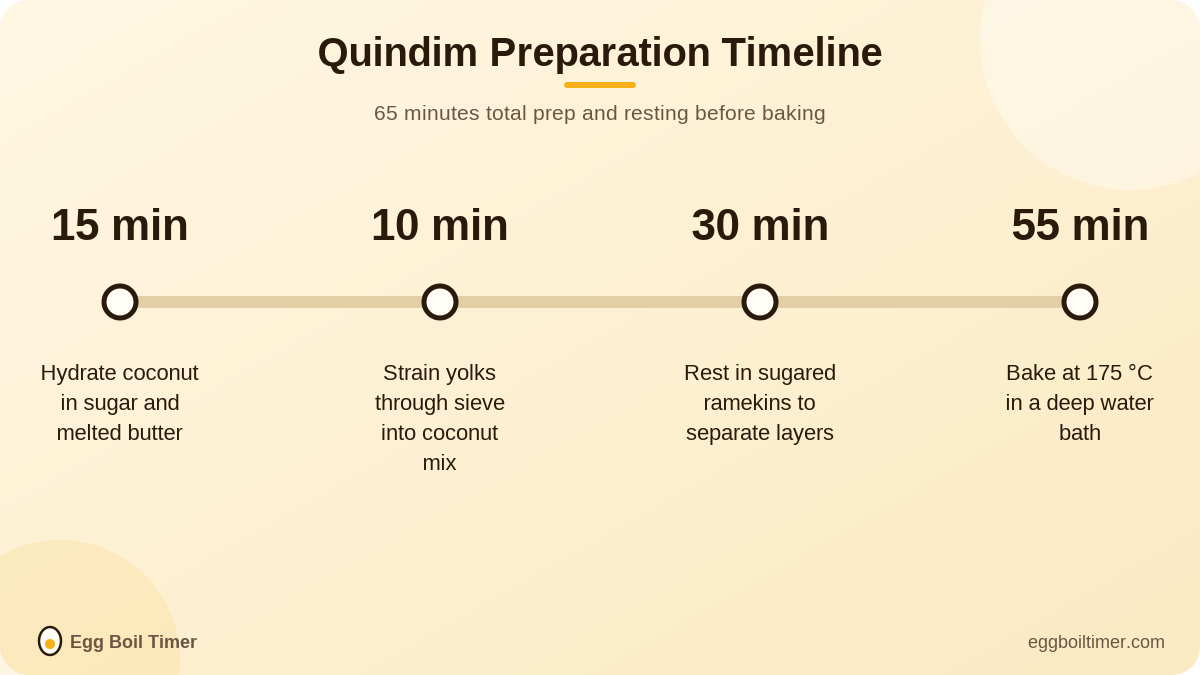
- Hydrate the coconut: Mix 200 g sugar, 100 g coconut, 30 g melted butter, and salt. Let it rest for 15 minutes. This softens the fibers so they do not feel woody in the finished cake.
- Strain the yolks: Separate 12 eggs. Place a fine-mesh sieve over the coconut mix and pour the yolks in. Pierce the membranes with a knife and let the liquid drain naturally. Do not press the solids through the mesh; this keeps the custard smooth. For tips on keeping yolks intact, see how to How to Separate Eggs Cleanly: Methods, Tools, and Storage">separate eggs.
- Fold gently: Use a spatula to combine the yolks with the coconut. Avoid whisking. Incorporating air creates bubbles that ruin the glass-like surface of the custard.
- Prepare the sugar wall: Smear softened butter inside 12 ramekins. Coat every millimeter with granulated sugar and tap out the excess. This sugar melts into a syrup that acts as a release agent.
- Rest the batter: Fill the molds three-quarters full. Let them sit on the counter for 30 minutes. This is the moment the coconut rises to form the crust.
- Bake in a water bath: Preheat the oven to 175 °C (350 °F). Place ramekins in a roasting pan and fill with boiling water halfway up the sides. Bake for 50 to 55 minutes until the tops are golden and a toothpick comes out clean.
Quindim vs. Pudim: Why Brazilian Custards Differ
While both are staples of Brazilian dessert tables, quindim and pudim (the local version of Classic Flan: Caramel, Custard Ratios, and Water Bath Baking">flan) rely on different structural principles. Pudim is a dairy-heavy custard made with condensed milk and whole eggs. It is uniform in texture and relies on the proteins in both the whites and yolks to set into a wobbly, smooth block. Quindim, however, is entirely dairy-free except for a small amount of butter, relying purely on the fat and protein of 12 yolks to create its body.
The flavor profiles also diverge significantly. Pudim is dominated by caramel and vanilla, whereas quindim is a celebration of coconut and the rich, almost savory depth of concentrated yolks. Because quindim lacks the milk proteins found in pudim, it has a much higher gloss and a more intense yellow hue. The separation into two layers is unique to quindim; a pudim that separates is usually considered a technical failure caused by over-whisking or improper ingredient ratios.
Diagnostic Guide for Texture and Unmolding Issues
Yolk-dense desserts react quickly to small changes in temperature. Use this table to fix consistency problems before your next batch. Remember that the internal temperature must reach 71 °C (160 °F) to be safe and fully set.
| Symptom | Root Cause | Fix |
|---|---|---|
| Watery or weeping custard | Underbaked or the water bath was too cool. | Bake until the center is set (71 °C / 160 °F). |
| Cracked or curdled surface | Oven was too hot or the water bath ran dry. | Keep the water level consistent at the halfway mark. |
| Sticks to the ramekin | Missed a spot with butter or sugar. | Unmold while warm, not cold. Dip the base in warm water for 60 seconds if stuck. |
| Grainy or sulfurous flavor | Membranes forced through the sieve. | Let yolks drain naturally; do not scrape the sieve. |
Cooling, Unmolding, and Storage Guidelines
Timing the unmolding is the difference between a tall dome and a broken mess. Leave the ramekins in their warm water bath for 10 minutes after they leave the oven. Move them to a wire rack for another 20 minutes until they are warm to the touch. This gradual cooling prevents the custard from shrinking too quickly, which can cause the delicate surface to pull away and tear.
Run a thin knife around the top edge. Invert a plate over the mold, flip, and shake once. The quindim should slide out, releasing a pool of clear syrup. If you wait until they are cold, the sugar syrup hardens and acts like glue. Chill the unmolded cakes for at least 4 hours before eating to firm up the yolk structure. This chilling period is essential for the flavors to meld and the coconut base to reach its final chewy consistency.
Quindim stays fresh in a sealed container for 5 days in the fridge. You can also freeze them on a tray, wrap them in foil once solid, and store for 2 months. Thaw them in the refrigerator overnight. Instead of discarding the 12 spare whites, use them for a light Mastering Meringue: French, Swiss, and Italian Techniques">meringue or a crisp Pavlova Recipe: How to Make a Crisp Meringue Base">pavlova. For precision timing on any egg dish, use our Egg Boil Timer">egg boil timer.


